
Have you ever wondered why some small homes look incredibly grand from the street, while others simply look… tiny? The secret isn’t in the square footage; it is entirely in the elevation.
When it comes to maximizing curb appeal on a compact plot, the best interior designers in Bangalore will tell you that smart exterior planning is just as crucial as the interior layout. As leading interior designers in Bangalore, the Elevate Interio team knows that a front house design for small houses requires a very specific approach to proportion, texture, and color to achieve a premium look.
It is a common misconception that luxury, head-turning facades are exclusively reserved for sprawling, multi-acre villas. In reality, a well-executed modern elevation can make a compact footprint look expansive, highly bespoke, and architecturally significant. We are moving far beyond the era of flat, uninspired concrete boxes.
The 2026 approach is all about Soft Modernism using tonal layering, vertical optical illusions, and the perfect blend of natural materials to create a striking first impression without inflating construction costs.
Your home’s exterior is its public signature. A small plot should never mean compromising on architectural impact. With the right design strategy, a compact home can easily become the standout property in your entire neighborhood.
In this guide, we will break down the latest architectural trends and practical techniques to transform your small home’s exterior into a modern masterpiece. Let’s explore how to play with proportions and mixed materials to achieve that coveted “affordable luxury” look before you even step through the front door.
The End of High Contrast and Embracing Tonal Layering
For years, the go-to formula for a modern small home exterior design was stark, high-contrast color blocking. Usually, this meant pairing blindingly bright white plaster with deep charcoal or pitch black trim.
While this look had its moment, 2026 architectural data shows a definitive shift away from these clinical, high-contrast palettes. On a smaller home, sharp color blocks can chop up the facade visually, making the property look fragmented and smaller than it actually is.
Instead, the modern standard for compact luxury is tonal layering. This technique involves selecting a single, warm base color and layering it with various shades from the exact same color family.
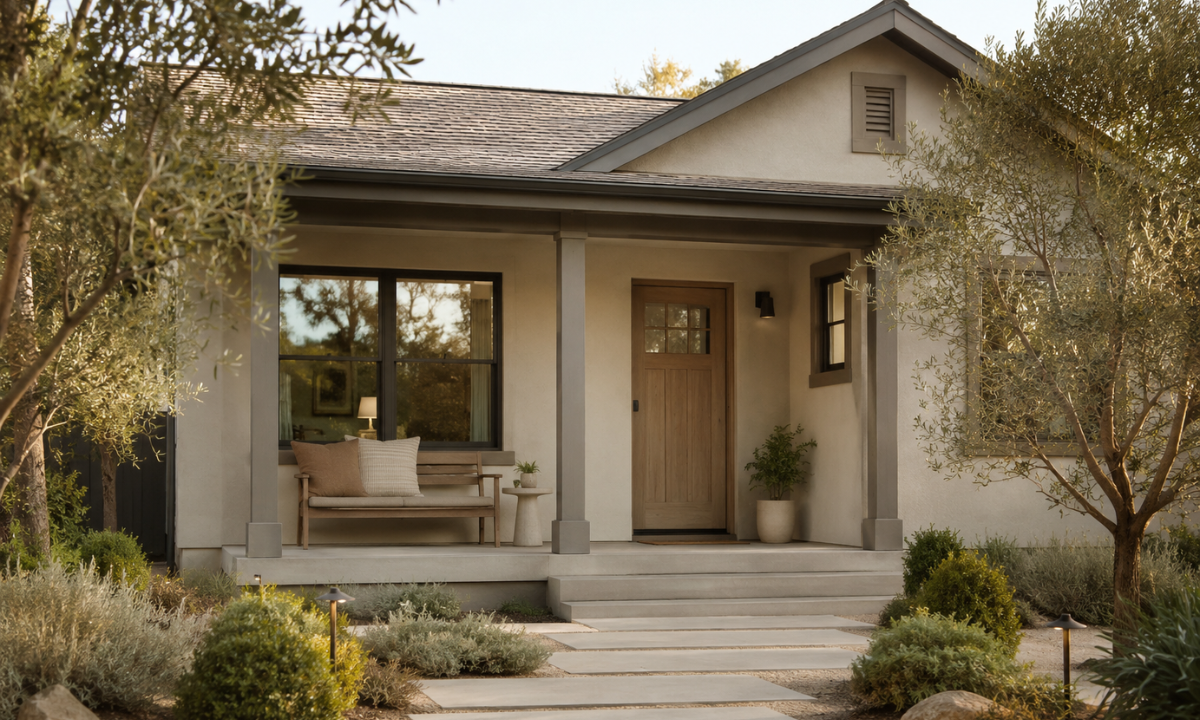
This creates a smooth, cohesive flow that makes a small home look enveloping, continuous, and significantly more expensive.
(Think of it as a layering pattern)
| [ Accent Projections ] Muted Clay / Soft Terracotta |
| [ Secondary Features ] Warm Taupe / Mushroom Grey |
| [ Main Building Body ] Warm Off-White / Alabaster |
The Top 2026 Tonal Palettes for Small Elevations
When working with a small plot, you want colors that ground the property into its surroundings while softly reflecting natural light. Here are the three most successful tonal combinations used by architects today:
- The Earthy Desert Palette: A base of warm alabaster paired with secondary accents of mushroom grey and deep clay. This palette feels rich, handles dusty climates exceptionally well, and adds instant warmth.
- The Urban Greige Palette: A base of soft grey-beige (greige) layered with deep charcoal trims and light stone facades. It gives a sleek, metropolitan look without the coldness of pure blue-grays.
- The Biophilic Warm Neutral Palette: Soft cream paired with light olive or sage tones and warm cedar wood grain. This is ideal if you plan to integrate planters or a vertical green wall into your front gate design.
Why Tonal Layering Expands a Small House Front
- Eliminates Harsh Visual Breaks: When the human eye transitions smoothly from a light taupe wall to a slightly darker mushroom trim, it perceives the home as a singular, grand structure. There are no sudden black lines to cut the building short.
- Emphasizes Architectural Shadows: Instead of relying on paint to create contrast, tonal layering lets the actual architecture do the talking. The subtle shifts in shade highlight the natural shadows cast by your balcony window, parapet wall, or structural columns.
- Maintains a Premium Edge Over Time: High-contrast blacks and whites show dirt, dust, and weathering almost immediately. Tonal neutrals are incredibly forgiving, maintaining their “magazine-ready” look through heavy monsoons and intense summer sun.
When applying a tonal palette, always use the lightest shade on the largest surface area of the house body. Reserve the deeper, richer tones for recessed elements, window frames, or architectural projections to give the front facade a beautiful sense of depth.
The Triple Threat Material Mashup
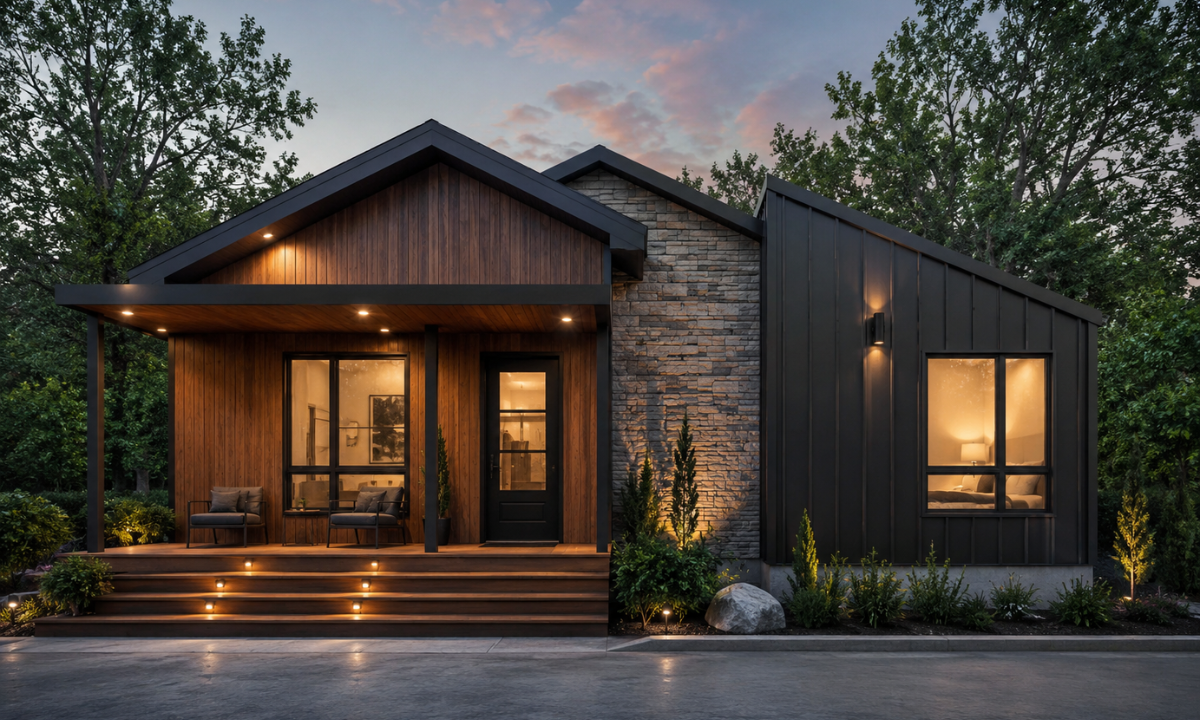
One of the easiest ways to make a small house look generic is to cover the entire facade in a single texture, such as flat cement plaster. Even if you use a premium paint color, a completely flat surface lacks depth. To create a striking, modern elevation of a small house, contemporary architects rely on a concept known as the triple threat material mashup.
The rule is simple: choose three distinct textures: a solid stone or stone-look element, a warm wood or composite siding, and a sleek metal accent and distribute them strategically across your facade.
Mixing these materials creates layers of visual texture that make a compact property look custom-built and high-end.
Balancing the Three Key Textures
To keep a small home exterior design looking balanced rather than cluttered, you must allocate these three materials with clear intent:
- The Stone or Masonry Anchor (Rough Texture): Use stone cladding or textured concrete on the ground level or a main structural column. This grounds the house visually, creating a sense of permanence and strength.
- The Wood Siding Accent (Warm Texture): Use natural timber look composites or durable external HPL sheets on a recessed wall, balcony ceiling, or projecting box element. Wood breaks up the coldness of modern architecture and adds immediate warmth and luxury.
- The Sleek Metal Trim (Smooth Texture): Use slim matte black aluminum or powder-coated iron for your window frames, balcony railings, and main front gate. The crisp, clean lines of metal frames tie everything together and add a modern, geometric edge.
Maximum Impact on a Practical Budget
Homeowners often worry that using materials like stone and wood will skyrocket their construction costs. However, achieving an affordable luxury look is all about clever material placement. You do not need to wrap your entire house in expensive materials to make a statement.
Instead of solid wood planks, modern designers use wood-polymer composites (WPC) or high-pressure laminates (HPL) that look identical to real cedar or teak but cost a fraction of the price and require zero maintenance. Similarly, stone-veneer tiles or porcelain cladding can be applied quickly over standard brickwork to give the illusion of a massive, solid stone wall.
Pro Tip: When mixing these textures, follow the 60-30-10 distribution rule. Let a standard painted texture cover 60% of the facade, use your wood or stone cladding for 30% on a major focal element, and reserve the sleek metal trims for the final 10% to outline the architecture.
After breaking up the facade into a collection of tactile textures, you draw attention to individual design features rather than the overall size of the plot, creating a sophisticated and memorable street presence.
The Power of Vertical Siding
When designing a front house design for small houses, your greatest architectural challenge is often height. A low-slung, single-story property or a compact two-story structure can easily end up looking squat if the exterior lines run exclusively horizontal. To counteract this, modern designers borrow a classic fashion rule: vertical lines elongate, while horizontal lines widen.
By swapping traditional horizontal siding or plaster grooving for clean, vertical cladding, you can completely manipulate how the human eye perceives the proportions of your home.
The Science of the Vertical Optical Illusion
Vertical lines act as visual pathways. When someone looks at your home from the street, their eyes naturally follow the dominant lines of the structure.
Horizontal elements force the eyes to move side to side, emphasizing the narrow boundaries of a tight plot. Vertical elements, however, force the eyes to travel upward from the foundation straight to the parapet wall, making the entire building look taller, loftier, and more imposing.
Key Ways to Implement Vertical Elements
To achieve this height boost, you can integrate vertical lines using several different materials and methods:
- Vertical Board and Batten Cladding: This involves using wide vertical panels joined together by thin wooden or composite strips called battens. It adds a beautiful, rhythmic shadow pattern across the front wall that changes dynamically throughout the day.
- Metal Standing-Seam Panels: For a highly contemporary, industrial-chic look, matte charcoal or bronze vertical metal panels look exceptionally sleek on a projecting balcony box.
- Vertical Concrete Grooves: If you are working on a tighter budget, your structural team can create clean, vertical plaster grooves directly into the cement facade using specialized molding tools before the paint is applied.
The Small Details That Complete the Illusion
To make this vertical strategy work flawlessly, you must align the smaller architectural details of your home with the overall upward flow:
- Tall, Narrow Window Profiles: Replace wide, square windows with floor-to-ceiling glass panels or narrow rectangular windows. This accentuates the vertical rhythm of the siding.
- Elongated Front Door Designs: Choose a front door that features vertical wood planking or a long, continuous vertical pull handle rather than a traditional small doorknob.
- Strategic Drainage Placement: Hide ugly horizontal rainwater pipes. Instead, route them vertically along the corners of the building, painting them in the same shade as the background wall to make them disappear.
A Quick Cheat Sheet for Line Orientation
| Design Element | Horizontal Lines | Vertical Lines |
|---|---|---|
| Visual Impact | Widens the property, feels grounded and traditional. | Tallies the property, feels soaring and modern. |
| Best Used On | Tall, narrow villas that need to look more stable. | Compact 2BHK plots that need an illusion of grandeur. |
| Ideal Locations | Long boundary walls or low garden retaining fences. | Main front facade columns, stairwell towers, and balcony boxes. |
You do not need to make the entire house vertical. A highly successful technique is to apply vertical cladding exclusively to your staircase tower or a single projecting structural column. This creates a powerful vertical anchor that balances out the horizontal lines of your balconies and gates.
Being intentional with line direction, you can turn a humble, compact footprint into an architectural statement that proudly claims its space on the street.
Soft Modernism with Curves, Arches, and Biophilic Touches
For a long time, modern architecture was defined by sharp, aggressive 90-degree angles and cold, geometric box shapes.
However, on a smaller house, too many hard corners can make the building look like a rigid, uninviting concrete block. The current design movement shifts toward Soft Modernism, an approach that retains the clean, uncluttered look of modern design but softens the edges using gentle curves, arches, and natural green elements.
By introducing fluid lines and living plants to your front house design for small houses, you break up the monotony of standard brickwork and create a welcoming, high-end entrance.
1. Introducing Structural Curves and Arches
You do not need a massive estate to incorporate arches. In fact, subtle curves work wonders on compact properties by breaking up the harsh horizontal and vertical lines of the main structure.
- The Arched Main Entrance: Instead of a standard rectangular doorway, a soft, sweeping arch over your main entrance porch creates an elegant framing effect. It acts as a focal point that instantly draws attention away from the narrow width of the house.
- Curved Balcony Profiles: Smooth out the sharp corners of your first-floor balcony slab. A gently rounded edge on a concrete balcony projection makes the entire upper level look custom-molded, mimic-ing high-end boutique resort architecture.
Introduce semi-circular fluted wall panels or concrete columns near the gate. The repeating, curved grooves catch shadows beautifully and add incredible tactile depth to the front facade.
2. Biophilic Integration
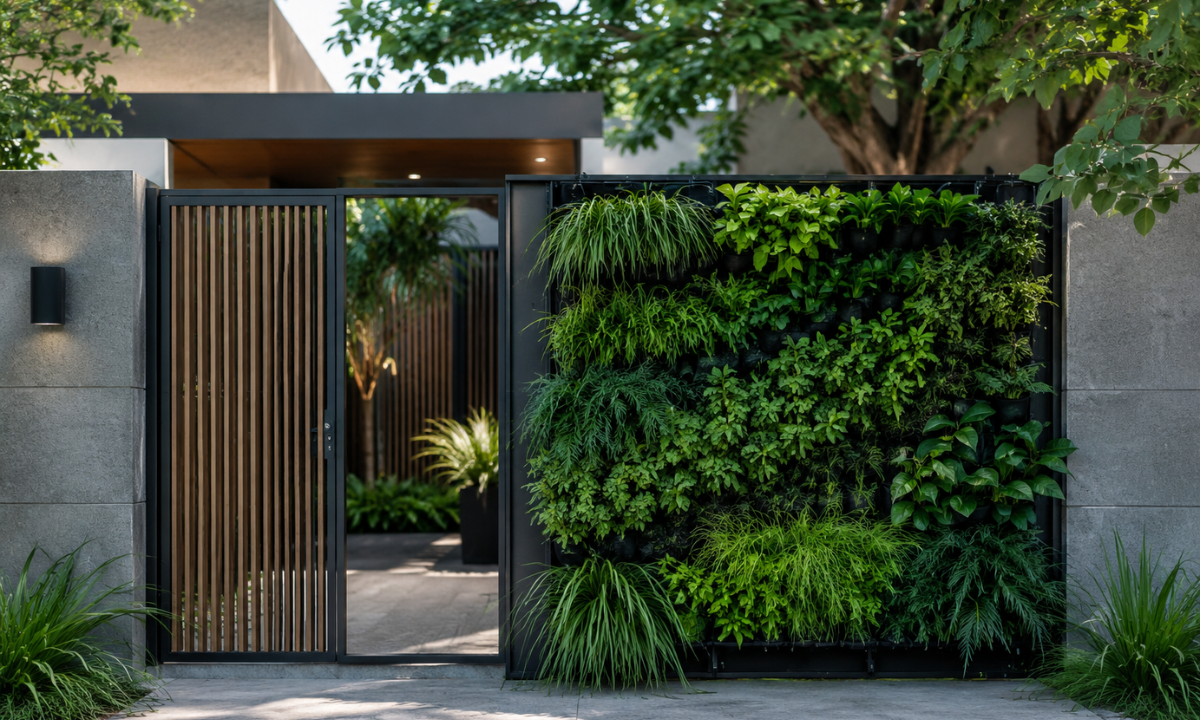
Biophilic design is all about weaving nature into the structural fabric of your home. For small city plots where front garden space is limited or non-existent, the house facade itself must become the canvas for greenery.
- Integrated Built-In Planters: Work with your structural designer to cast concrete planter boxes directly into your balcony railings or below your front windows. This ensures your plants look like an intentional part of the architecture rather than an afterthought of loose plastic pots.
- The Vertical Screen Wall: Create a compound wall or main gate screen using powder-coated metal mesh or terracotta jaali blocks. Training a lush climbing vine, like Money Plant or Creeping Ficus, to grow across this screen creates a private, living privacy barrier that softens the street view.
- Recessed Planter Niches: Cut out small, illuminated architectural niches into your main front wall, specifically designed to hold cascading indoor-outdoor ferns.
When combining curves with greenery, keep your color palette incredibly simple. Let the natural green of the plants provide the primary accent color. Pair it with a soft cream or muted terracotta background so the textures complement each other rather than competing for attention.
Integrating these organic, curved elements ensures that your small home facade doesn’t just look striking from a distance; it feels warm, personal, and profoundly inviting up close.
Why Choose Elevate Interio for Your Complete Home Transformation?
An exceptional front house design for small houses is only half the journey. True luxury means entering a home where the interior layout perfectly mirrors the sophistication of the exterior. At Elevate Interio, we specialize in delivering complete turnkey solutions that blend jaw-dropping street appeal with space-optimized interiors.
Whether you are remodeling a compact standalone property or setting up brand new, highly functional 2bhk interiors, we ensure every square inch works flawlessly for your lifestyle.
Here is why Bangalore homeowners trust us with their dream properties:
- 20% More Functional Space: We utilize advanced spatial planning to unlock hidden storage and utility zones inside your home, making compact layouts feel grand.
- 45 to 60-Day Delivery Guarantee: Our efficient project management systems ensure your home transformation is completed on time, with zero unexpected delays.
- Complete Price Transparency: No hidden charges or surprise costs. The comprehensive quote you approve at the beginning of your journey is exactly what you pay at handover.
We back our materials and execution with a durable decade-long warranty alongside lifelong service support.
Conclusion
Your property footprint might be compact, but your architectural vision does not have to be. By combining the principles of soft modernism, a strategic mix of textures, vertical orientation, and smart tonal layering, you can achieve a small home exterior design that rivals any large-scale luxury villa.
Great design is not about how much space you have; it is about how beautifully and intelligently you use it. Let our experts help you visualize your ideal elevation of small house projects before construction even begins.
Contact Elevate Interio today to book a personalized 3D design consultation and start building your perfect home from the inside out.