
For families moving into a new home, setting up a sacred space is often the very first priority. However, optimizing a small pooja room within a compact layout can be a distinct challenge.
Balancing traditional Vastu principles with modern aesthetics requires a highly thoughtful approach to Pooja room interior design. As experienced 2 BHK Apartment Interior Designers in Bangalore, we understand that spatial constraints should never mean compromising on your spiritual sanctuary. Designing a beautiful, tranquil mandir is entirely achievable when you shift your perspective from simple furniture placement to intelligent spatial engineering.
In a typical 900 to 1,200-square-foot apartment, a dedicated, separate room for worship is rarely a structural option. Homeowners are often forced to carve out a sacred zone within the living room, dining area, hallways, or even structural niches. The core philosophy behind modern apartment mandirs is simple: maximize vertical volume and prioritize light permeability.
Traditionally, home temples were heavy, closed wooden structures that occupied significant floor space. In a modern apartment, a heavy unit can make the entire room feel cramped and disrupt the visual flow of your home. By utilizing lightweight materials, open geometric patterns, and floating architectural elements, you can respect age-old cultural traditions while maintaining an airy, uncluttered, and contemporary home environment.
Leading Pooja room interior designers in Bangalore often recommend customized wall-mounted mandirs, backlit panels, and space-saving storage solutions that seamlessly blend spirituality with functionality. These design strategies help homeowners create a dedicated worship area without sacrificing valuable living space.
A well-planned mandir acts as a visual anchor that brings a sense of calm to the entire household, proving that a high-end, peaceful spiritual retreat does not require a massive footprint.
Zero Floor Footprint (Wall-Mounted & Floating Designs)
When floor real estate carries a premium in a 2BHK layout, extending your floor plan vertically is the most efficient design strategy. Floating or wall-mounted designs completely free up the ground plane, allowing the room’s footprint to remain visually continuous and easy to maintain.
This approach prevents a small room or passage from feeling claustrophobic while establishing a distinct, elevated zone for daily worship.
Here are five wall-mounted design concepts engineered specifically for modern apartment life:
1. The Floating Minimalist Ledge
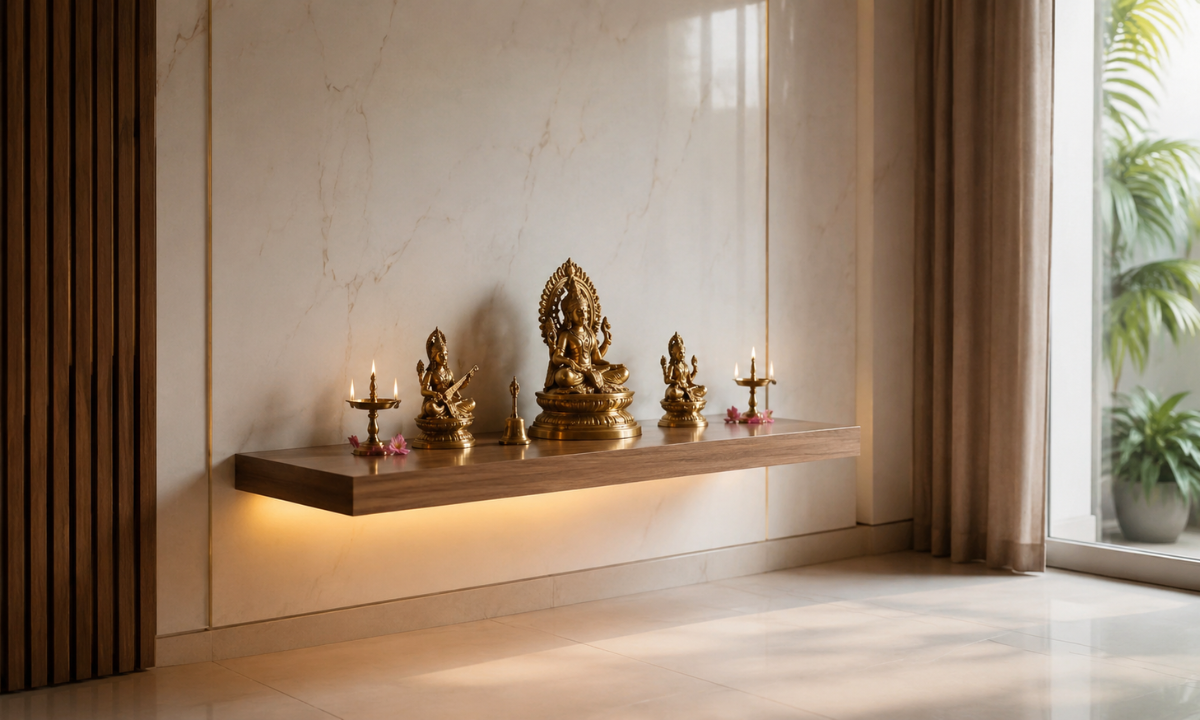
The human eye perceives space by tracking the continuity of the floor plane. By mounting a sleek, cantilevered platform directly onto the wall using heavy-duty concealed brackets, the floor beneath remains completely clear. This creates an optical illusion of a larger room while providing a pristine, dedicated altar.
This design uses High-Density High-Moisture Resistant (HDMR) boards rather than traditional heavy plywood. HDMR offers superior structural integrity against sagging and is completely warp-resistant, making it a highly durable foundation for holding brass idols without requiring floor pillars.
2. Wall-Mounted CNC Jali Enclosures
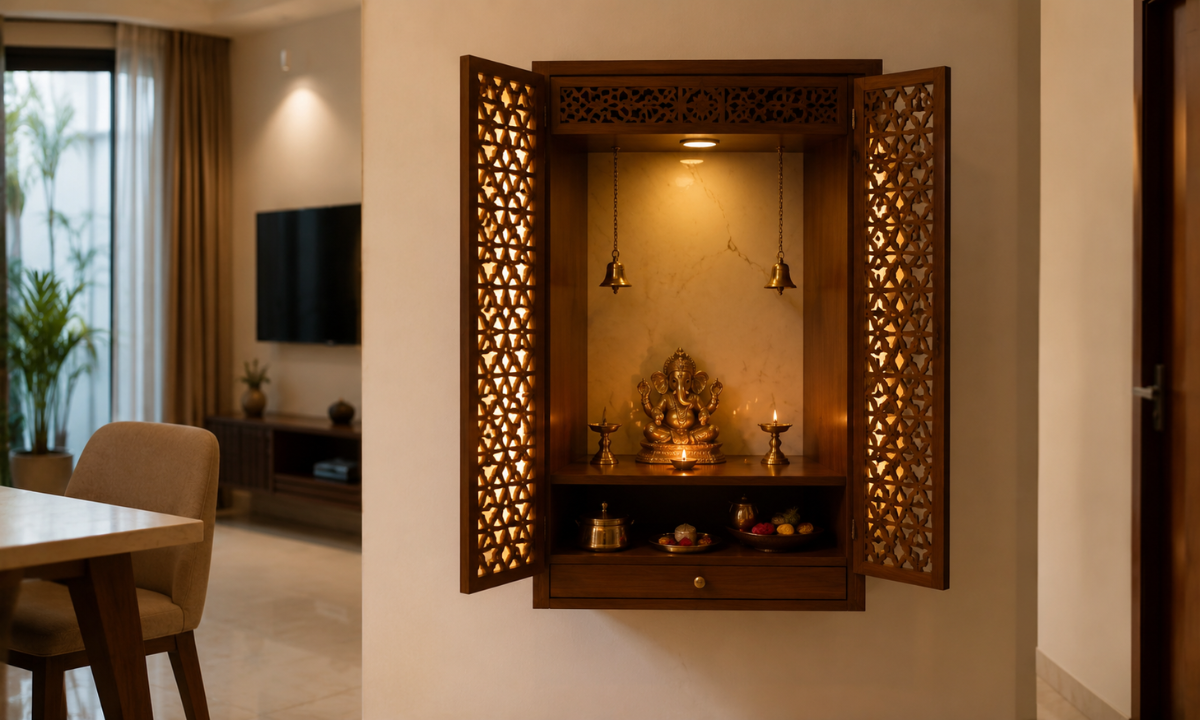
This concept addresses the need for a semi-private sacred space within a shared room. A wooden pooja room design featuring intricate geometric or floral laser-cut patterns allows for partial privacy while maintaining complete visual lightness. Precision CNC (Computer Numerical Control) cutting on marine-grade ply or medium-density fiberboard (MDF) creates a beautiful play of light and shadow.
Factually, these perforations ensure excellent ventilation, allowing smoke from camphor or incense to disperse naturally rather than getting trapped in a small enclosure.
3. The Corner Tiered Floating Shelf
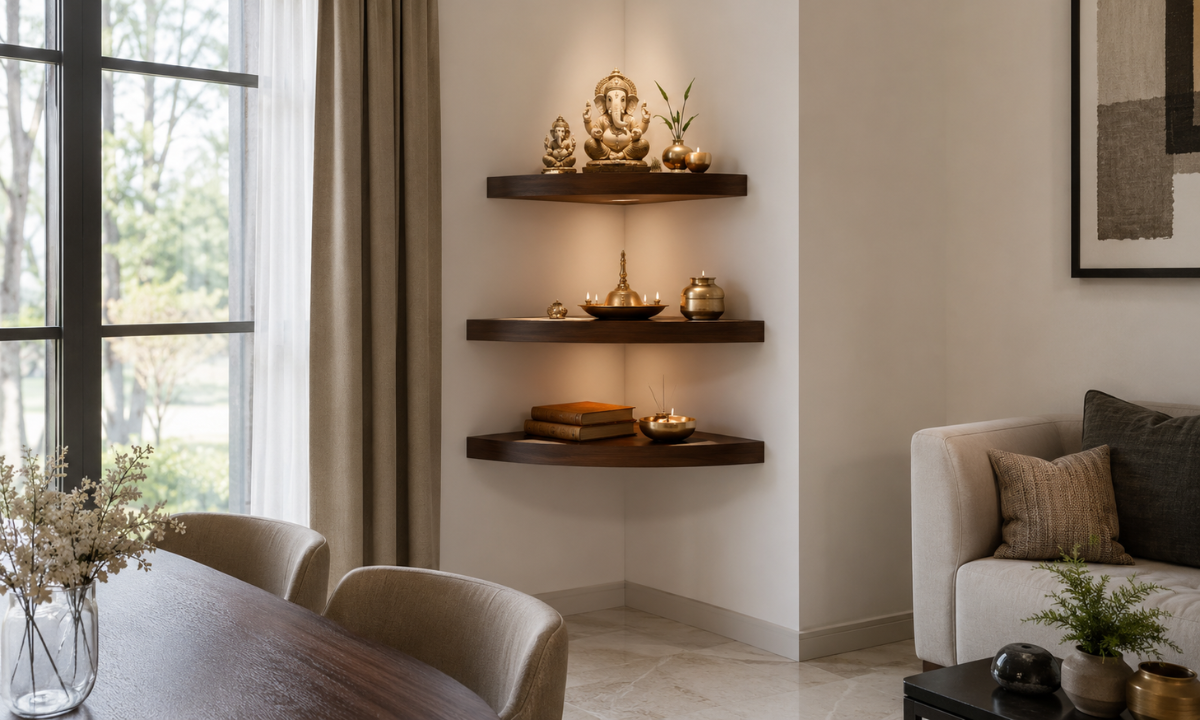
Every apartment features architectural “dead zones”, particularly corners near the dining table or living room windows. A tiered, corner-hugging floating system utilizes this under-mapped square footage, transforming an overlooked corner into a sacred architectural feature. Finished in a matte Polyurethane (PU) coating over engineered wood, these shelves resist moisture and daily wear.
Designing the unit in a tiered fashion allows you to separate the primary deities on the top tier from secondary brass lamps and daily prayer books below, maintaining flawless structural hierarchy.
4. Floating Drawer Units with Brass Accents
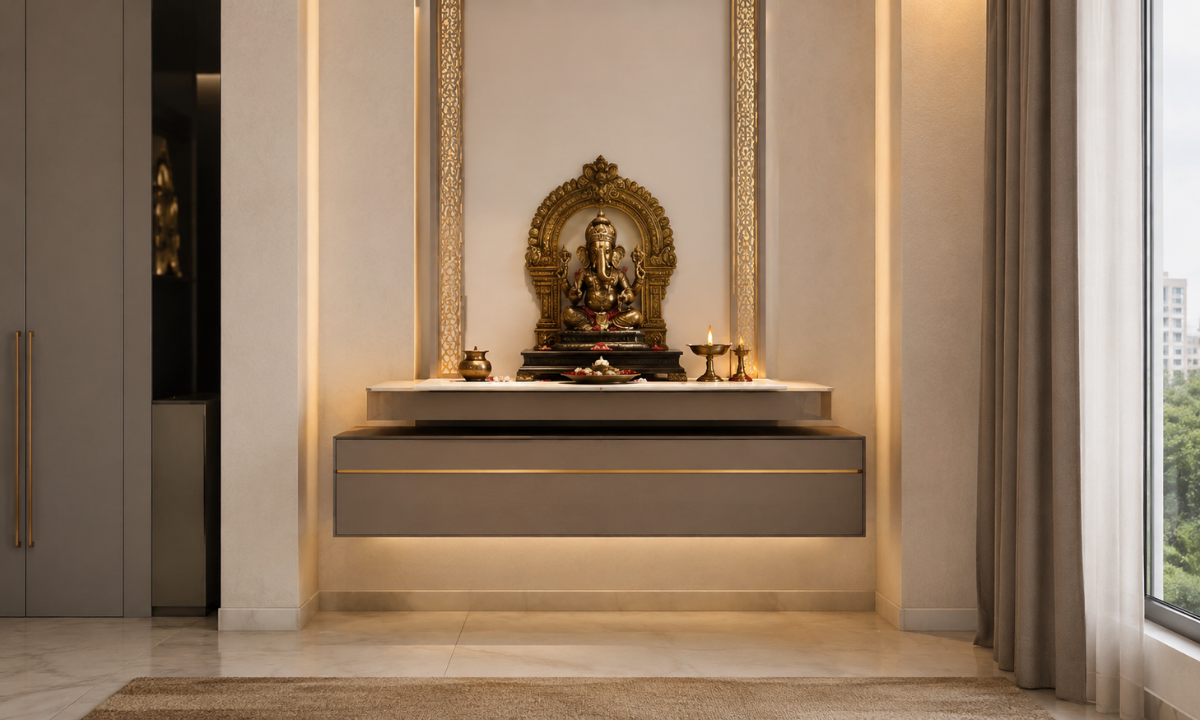
True convenience in a compact layout relies on immediate accessibility. Merging a floating idol platform with a sleek, handleless drawer unit directly underneath provides a highly functional solution that keeps the surrounding area entirely clutter-free.
This unit utilizes telescopic soft-close drawer channels wrapped in a premium, scratch-resistant laminate. Integrating subtle brass inlay strips into the laminate face bridges the gap between traditional temple metalwork and contemporary, clean-lined apartment aesthetics.
5. Backlit Faux-Onyx Wall Panels
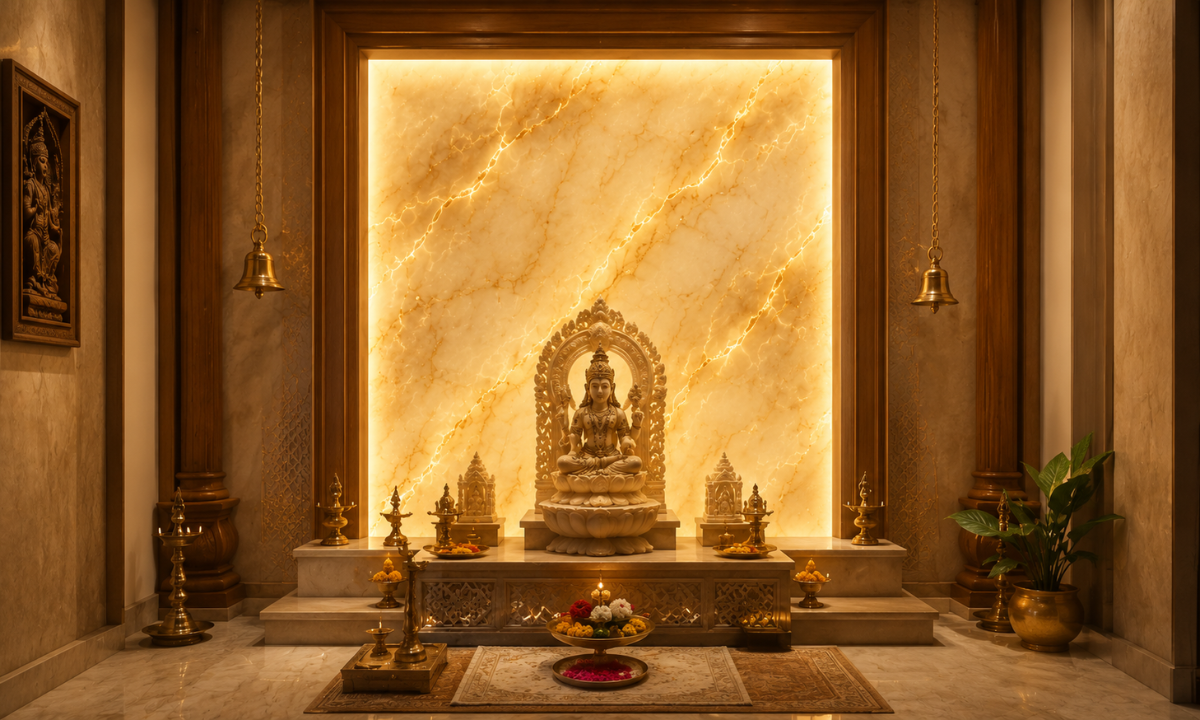
Light is a universal symbol of divinity. Instead of adding bulky decorative elements to a wall, this design utilizes a glowing, luminous backdrop that creates an instant spiritual aura without protruding more than two inches into the room.
Authentic onyx marble is incredibly heavy, fragile, and prohibitively expensive. This design swaps natural stone for a translucent acrylic faux-onyx sheet illuminated from behind by low-voltage, cool-running LED strip lights. This provides the exact opulent, veined texture of premium stone at a fraction of the cost and weight, perfectly encapsulating the essence of affordable luxury.
Integrating with the Architecture (Niche & Built-In Units)
When you purchase a standard 2BHK in Bangalore, the floor plan often includes awkward architectural niches, narrow hallways, or structural recesses that seem unusable.
Mass-market furniture cannot fit into these gaps seamlessly, leading to wasted square footage. However, a bespoke design approach views these structural quirks not as flaws, but as opportunities.
By building your mandir directly into the existing architecture of the apartment, you eliminate the need for standalone furniture. This integration ensures the pooja room feels like a natural, intentional part of the home rather than an afterthought squeezed into a corner.
Here are five built-in design strategies that transform dead apartment space into a spiritual focal point:
6. The Hallway Niche Transformation
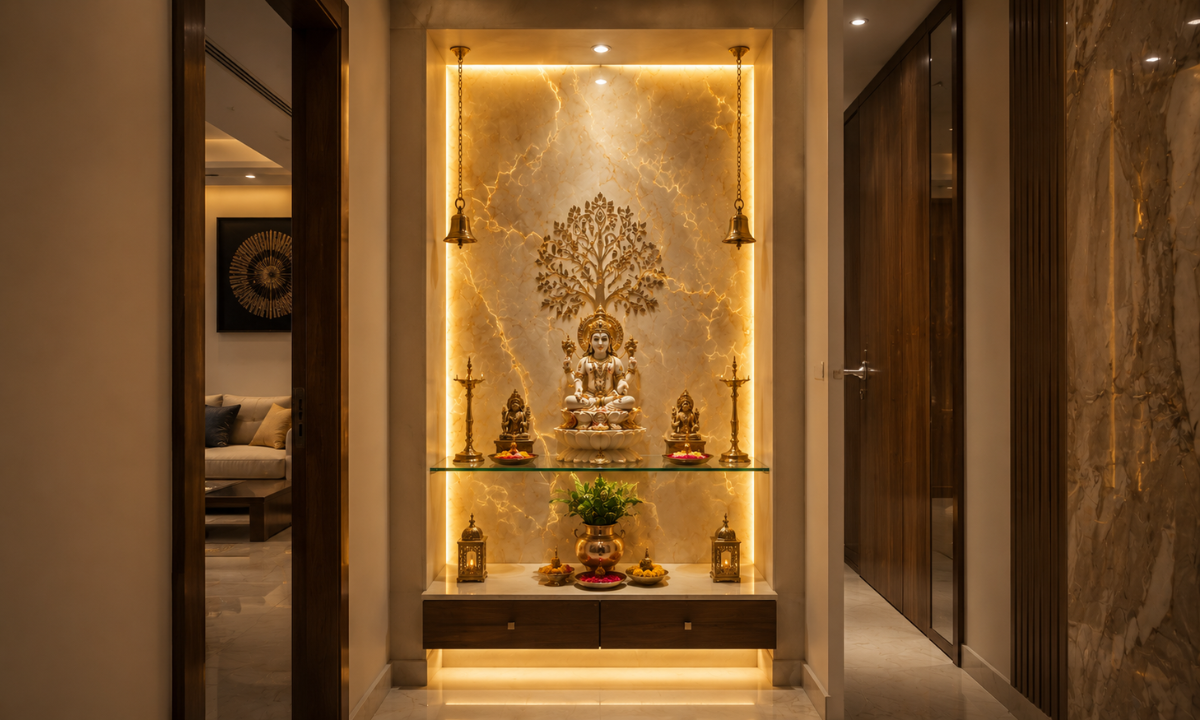
The narrow passageway connecting your living room to the bedrooms is typically a zone of pure transit, offering zero functional value. If your builder has left a recess in this hallway wall, converting it into a mandir centralizes the spiritual energy of the home without encroaching on your primary living areas.
To prevent the mandir from feeling like a dark cave, we line the inside of the niche with a reflective, metallic-finish laminate or a light-toned, textured wallpaper. Installing a custom-cut, toughened glass shelf for the idols ensures the space feels deep, bright, and visually expansive.
7. Wardrobe-Integrated Pooja Units
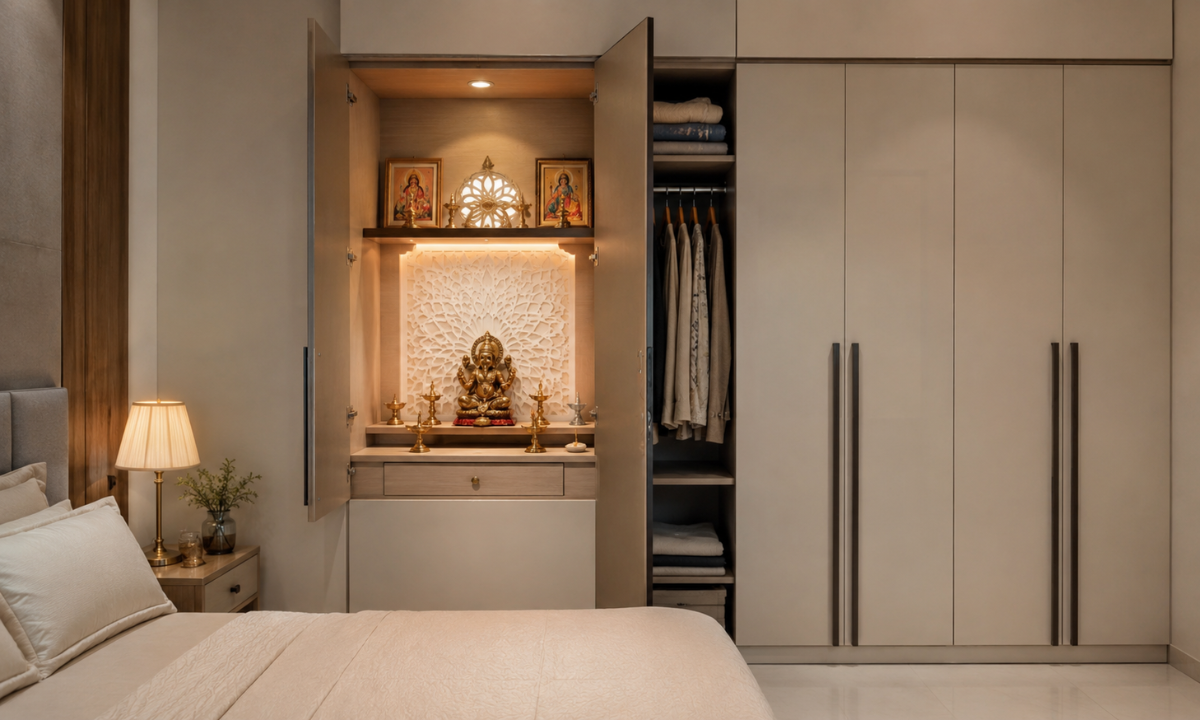
For homeowners facing extreme space constraints or those who prefer absolute privacy for their daily prayers, integrating the mandir directly into a guest bedroom wardrobe is a brilliant spatial hack. Behind a designated shutter lies a complete, beautifully lit altar that can be neatly concealed when not in use. As this unit sits adjacent to clothing and linens, safety and cleanliness are paramount.
We construct the internal pooja module using Boiling Water Resistant (BWR) grade plywood overlaid with fire-retardant laminates. Additionally, integrating an auto-sensor LED light that activates only when the wardrobe door is opened provides instant, hands-free illumination.
8. The Living Room TV Unit Extension
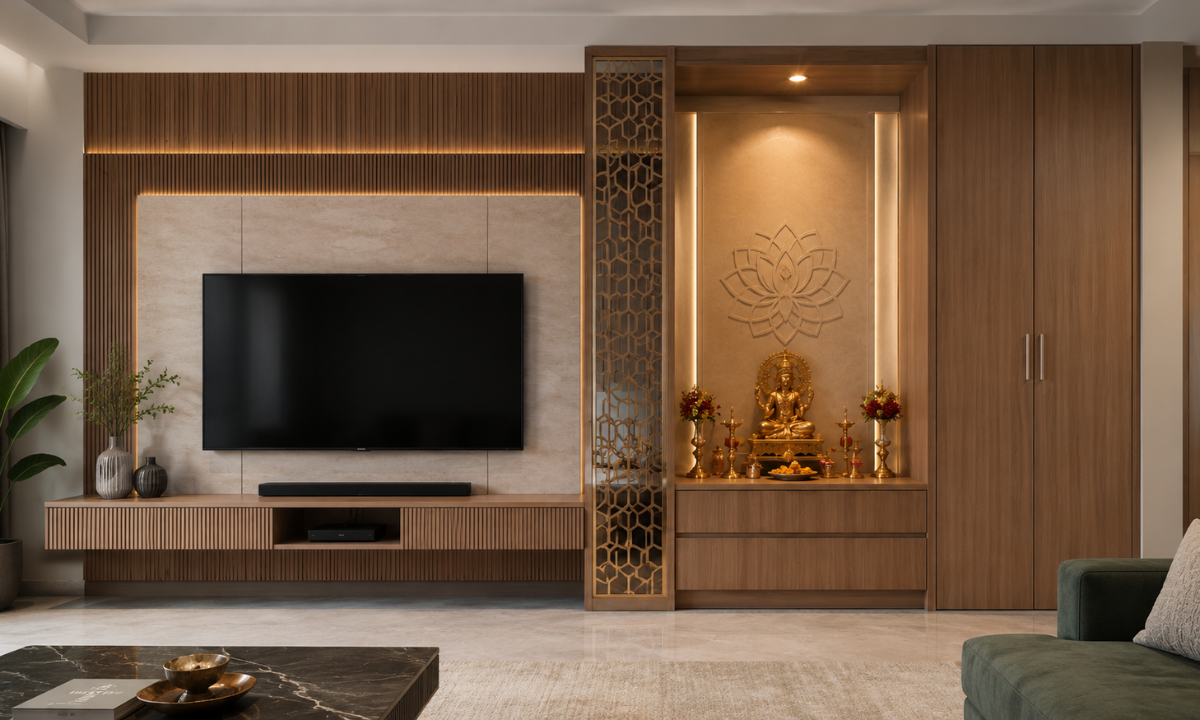
In compact living rooms, placing a wooden temple right next to a modern TV unit often creates a jarring visual clash. Instead of treating them as two separate entities, extending the design language of the media wall to encompass the pooja unit creates a unified, seamless aesthetic that visually widens the entire room.
The key to this execution is continuous material flow. If the TV unit uses a warm oak laminate with fluted paneling, the pooja unit utilizes the same finish. To maintain the sanctity of the altar, a subtle vertical divider, such as a slim wooden lattice or a tinted glass panel, is used to architecturally separate the entertainment zone from the sacred zone.
9. The Foyer Passage Compact Mandir
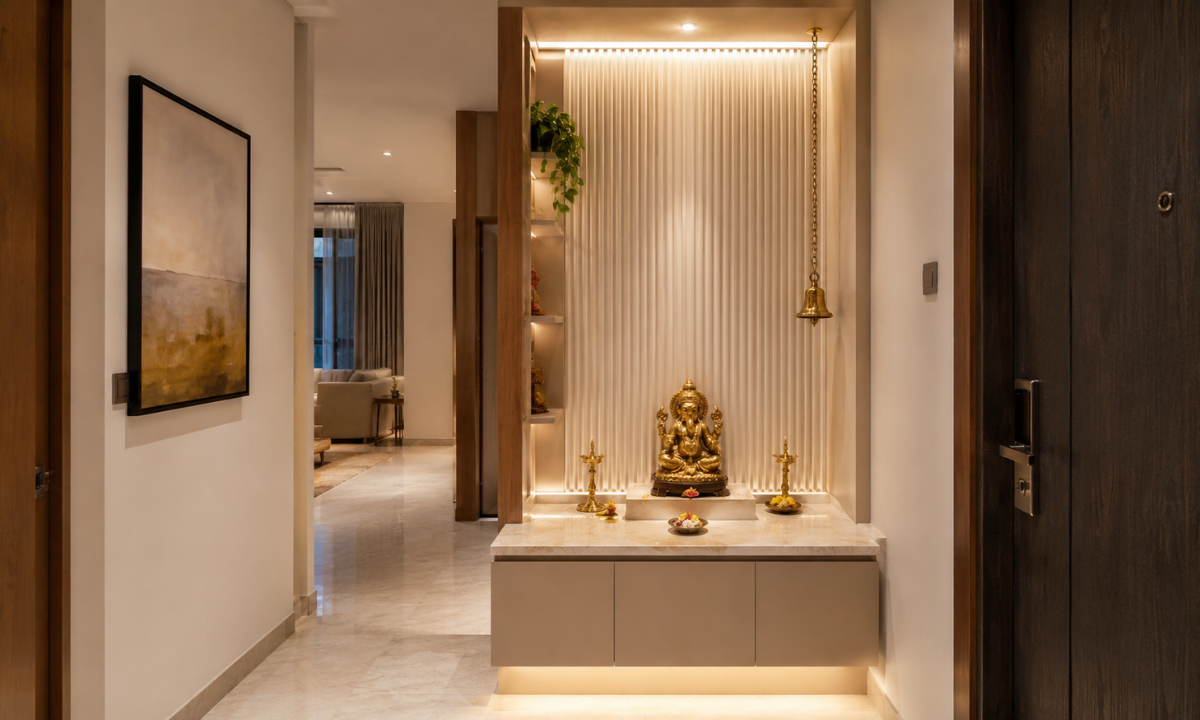
First impressions matter. Dedicating a compact built-in unit right at the entryway sets an immediate tone of peace and grounds the moment you or your guests step out of the Bangalore traffic and into your home.
The foyer is a high-traffic area, meaning the base of the mandir will inevitably encounter dust and keys. We design the base ledge using a highly durable, stain-resistant Quartz or Granite countertop instead of wood. This ensures the surface remains pristine and is incredibly easy to wipe down after lighting daily oil lamps.
10. The Dining Area Transition Niche
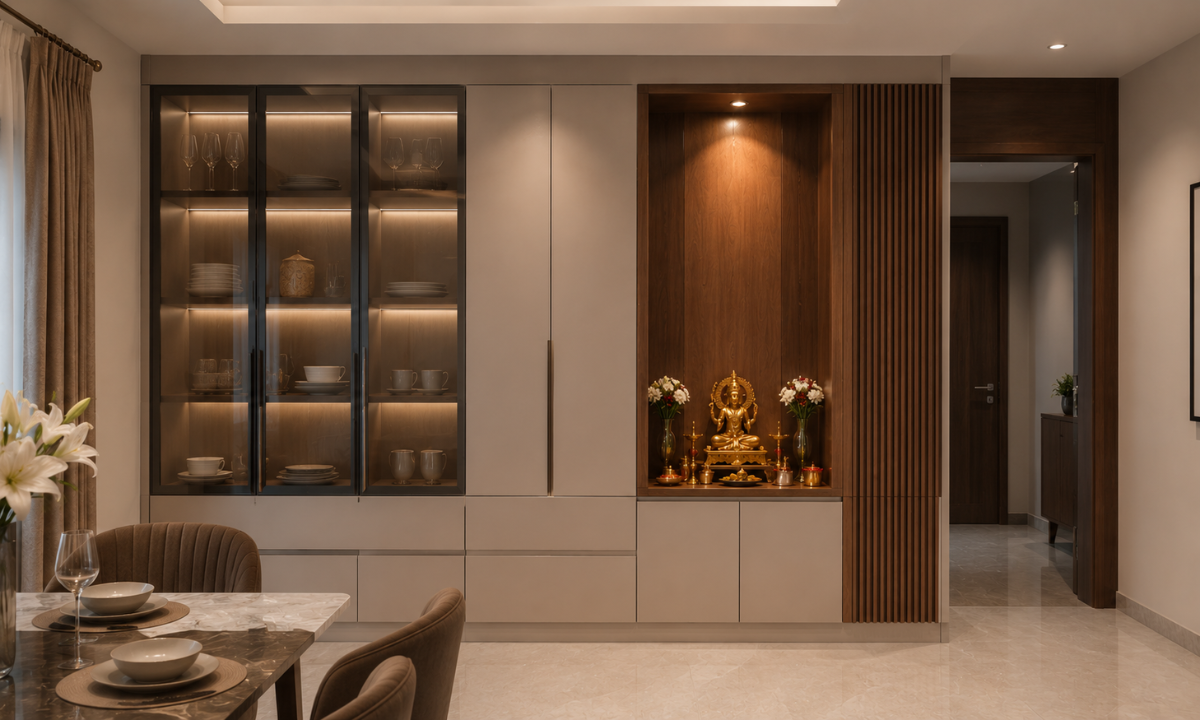
The dining area is the communal heart of the home, often featuring a long, empty wall. By designing a dual-purpose built-in unit, you can seamlessly transition a tall crockery cabinet into a dedicated pooja space along the same wall, maximizing utility without cluttering the floor.
To clearly demarcate the spiritual space from the dining storage without breaking the visual flow, we utilize contrasting yet complementary finishes. For instance, the crockery unit might feature matte acrylic doors, while the pooja section is highlighted with a rich, wood-grain interior and a dedicated spotlight, framing it beautifully during evening meals.
The Illusion of Space (Glass, Mirrors & Light)
In a typical Bangalore 2BHK, introducing heavy, solid wooden doors to enclose a pooja room instantly blocks natural light and visually chops the floor plan into smaller, claustrophobic boxes. To maintain a modern, airy atmosphere while honoring the sanctity of the space, elite interior design relies heavily on optical illusions.
By strategically integrating transparent, translucent, and reflective materials, you can create a dedicated spiritual zone that feels significantly larger than its actual square footage. Light is the most powerful tool in interior design; multiplying it through glass and mirrors ensures your mandir acts as a luminous focal point rather than a dark corner.
Here are four spatial hacks that use light and reflection to expand your pooja space:
11. Fluted Glass Partition Mandirs
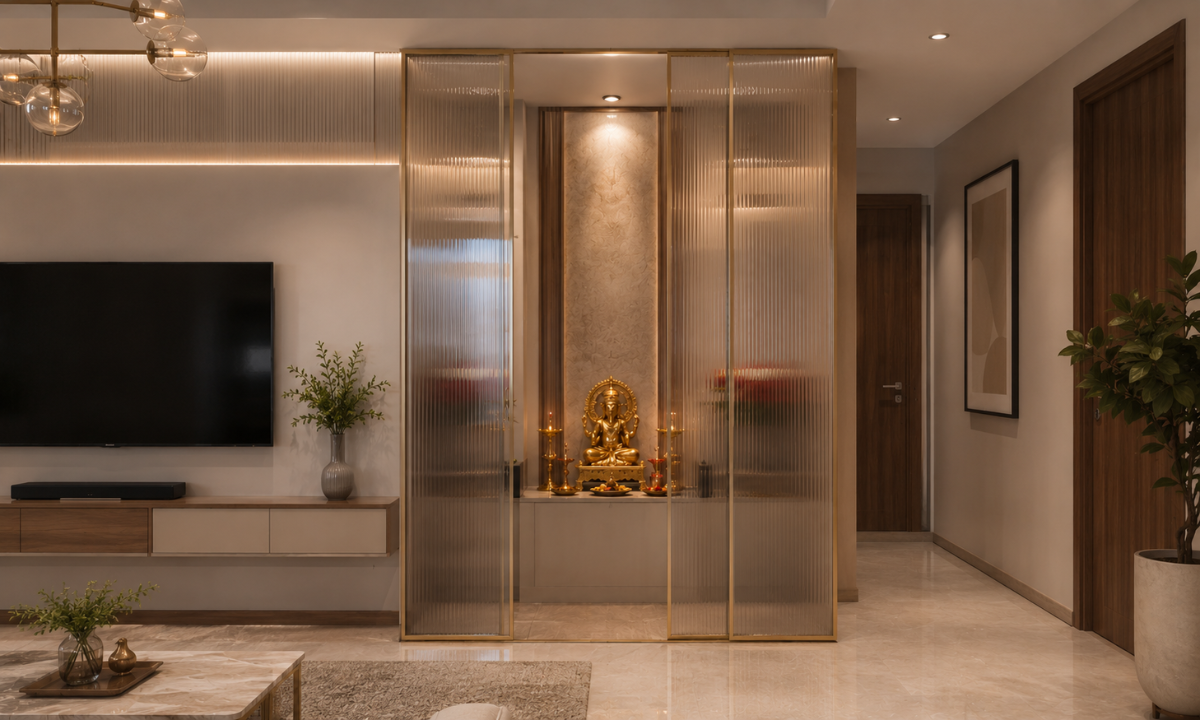
Many families prefer the deity to be gently obscured when not actively in prayer, but solid doors block light. Fluted (or ribbed) glass is the perfect architectural compromise. It provides visual privacy by blurring the details behind it, yet it allows the warm glow of your oil lamps to filter through into the living room, creating a beautiful, lantern-like effect.
We utilize 8mm toughened fluted glass framed in slim-profile aluminum (often finished in matte gold or black). Factually, the vertical ridges of fluted glass draw the eye upward, making standard 10-foot apartment ceilings appear taller while brilliantly hiding everyday pooja clutter like matchboxes and cotton wicks.
12. Frameless Glass Enclosures
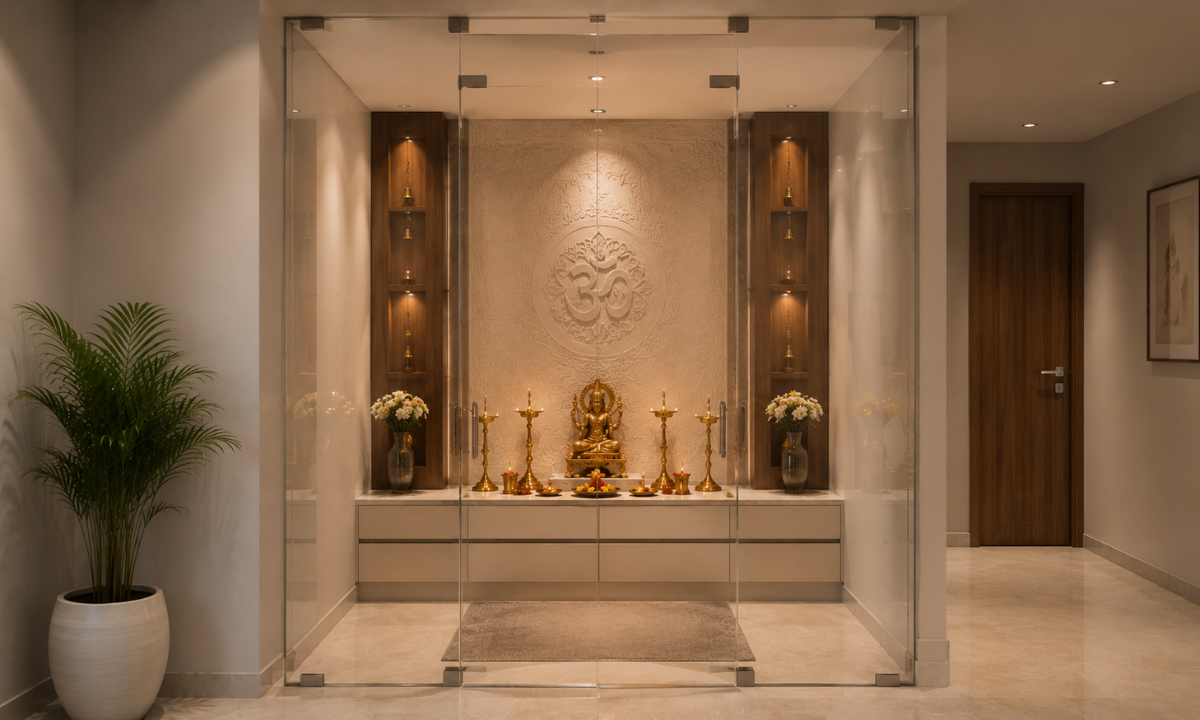
Early morning prayers and ringing bells can easily wake up the rest of the household in a compact apartment. A frameless glass enclosure solves this acoustic problem without shrinking the room. It creates a completely sound-dampened sanctuary that remains 100% visually connected to the rest of the house. This design uses heavy-duty 10mm clear toughened glass secured with minimal patch fittings instead of bulky wooden frames.
Unlike standard annealed glass, toughened glass is highly resistant to thermal stress, making it completely safe around lit diyas and incense heat.
13. Mirror-Backed Floating Mandirs
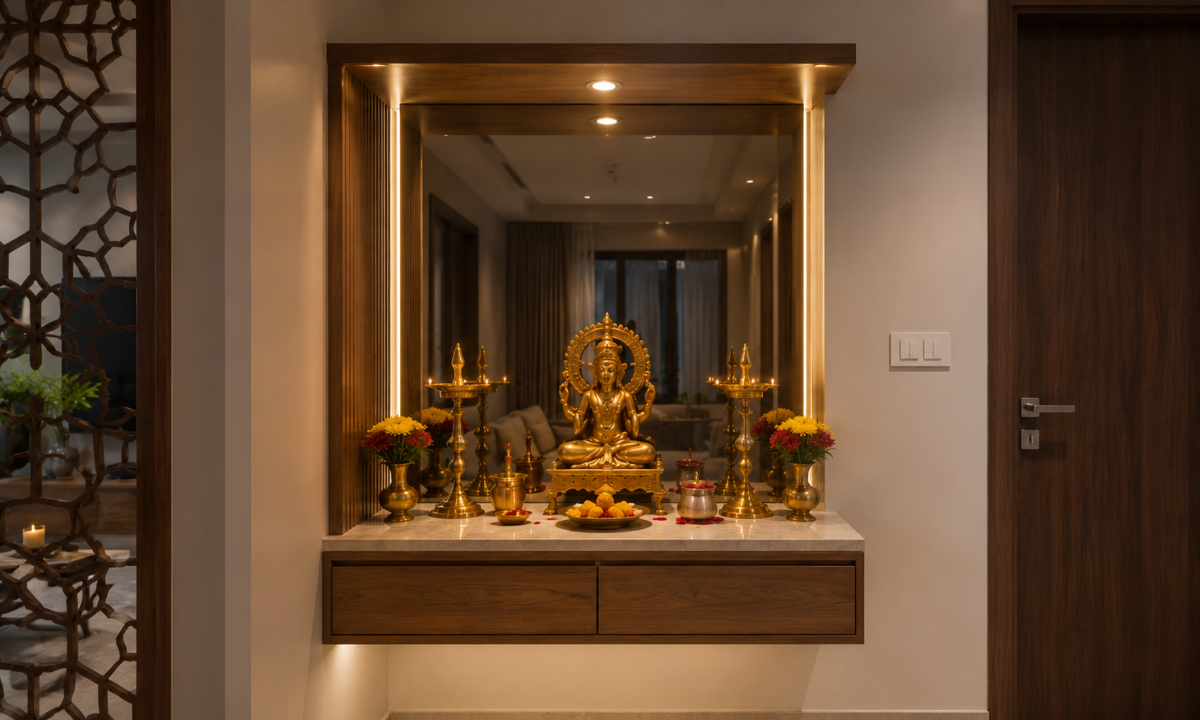
Placing a mirror behind an object is a classic interior design technique used to double the perceived depth of a shallow space.
When applied to a small, wall-mounted mandir, the mirror reflects the back of the brass idols, the lighting, and the room itself, making a unit that is only 15 inches deep feel like a spacious, walk-in temple.
Instead of standard clear mirrors, which can feel harsh and overly commercial, we specify bronze or grey-tinted mirrors for the backing. Tinted glass softens the reflection and beautifully amplifies the warm, golden tones of traditional brass lamps and marigold flowers.
14. Profile-Lit Acrylic Niches
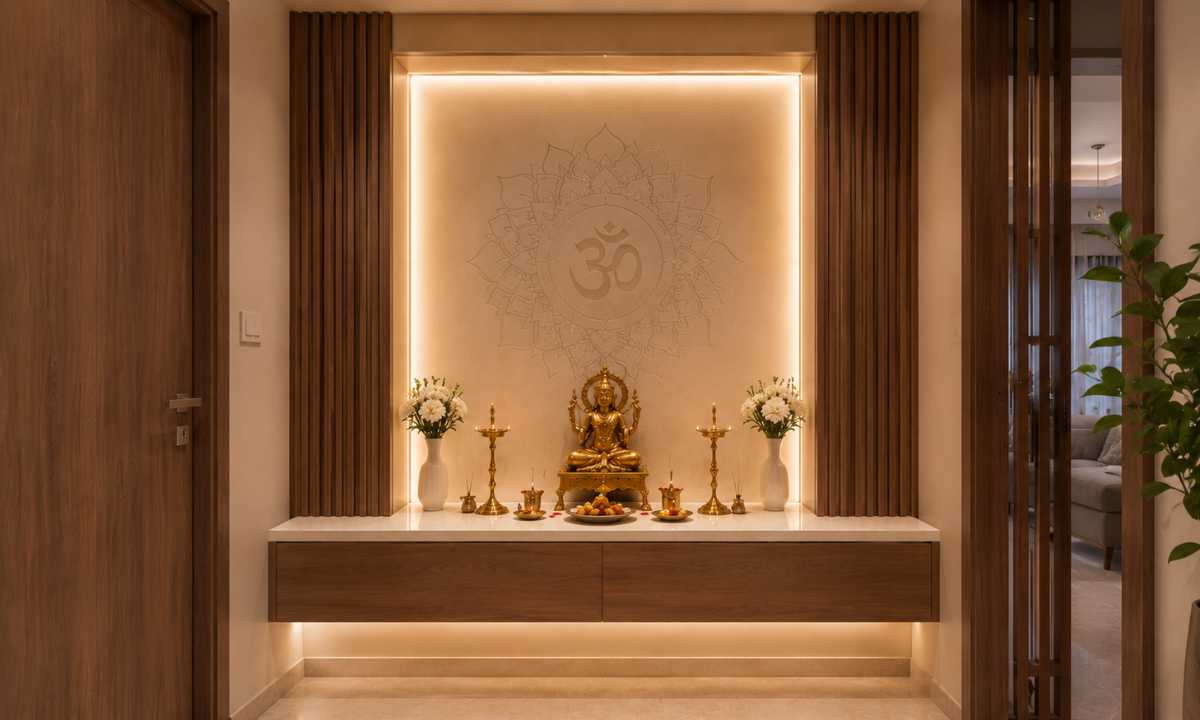
To create an instantly divine, halo-like atmosphere without taking up a single inch of physical space, we rely on integrated architectural lighting. A perfectly lit backdrop makes the mandir feel weightless and visually expansive.
We line the back of the mandir niche with heat-resistant acrylic or solid surface panels, inset with continuous COB (Chip on Board) LED strip lighting. Actually, COB LEDs are superior for small spaces because they emit a seamless, continuous band of light, completely eliminating the cheap “dotted” effect of standard LED strips, resulting in a premium, soft, and uninterrupted glow.
Traditional Echoes in Modern Materials (Texture & Form)
For many Bangalore homeowners, a modern apartment aesthetic shouldn’t mean leaving cultural roots behind. The challenge lies in honoring Vastu principles and the profound warmth of traditional Indian temples without making your compact 2BHK look visually disjointed or outdated.
The secret to bridging this gap lies in the careful selection of textures and materials. By combining the rich, grounding elements of classical design like wood grains and brass with the sleek, clean lines of modern engineering, you create a spiritual sanctuary that feels timeless, respectful, and perfectly at home in a contemporary apartment.
Here are four designs that beautifully balance traditional echoes with modern apartment living:
15. The Slatted Teakwood Backdrop
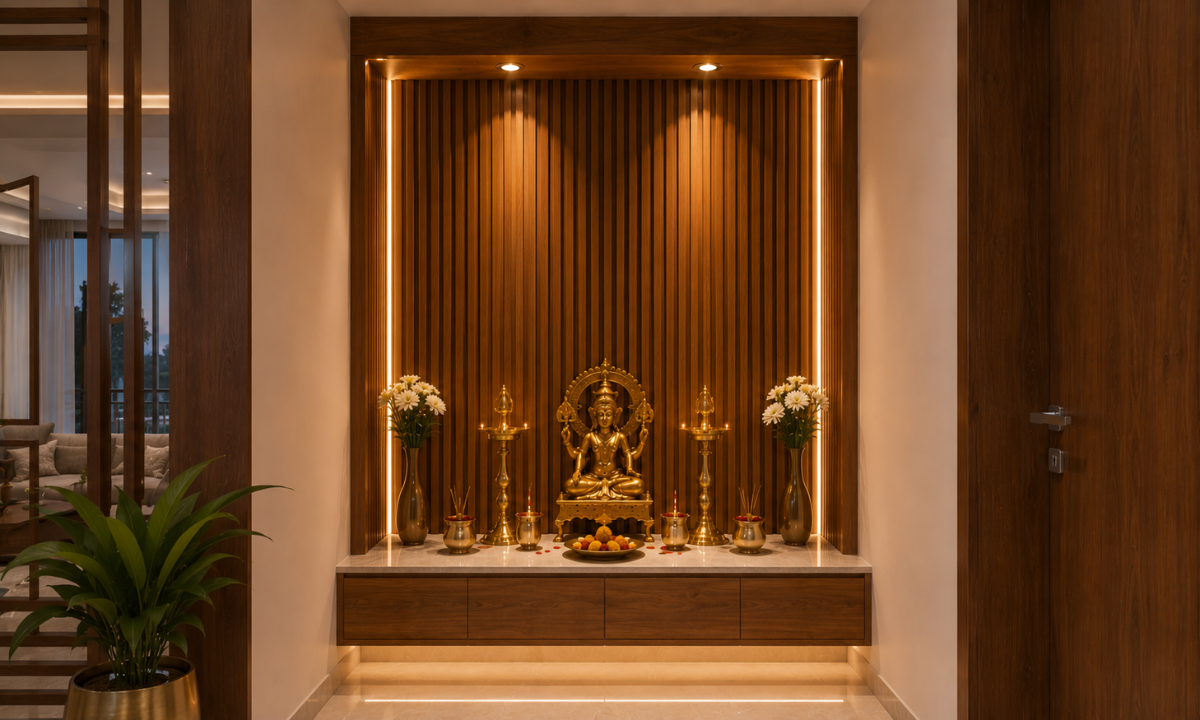
To inject immediate warmth into a stark white apartment, nothing works quite like the rich texture of natural wood. A wooden pooja room design featuring vertical slatted paneling brings a mid-century modern architectural element to the space while echoing the deeply traditional feel of ancient wooden temples. The vertical lines also naturally draw the eye upward, giving the illusion of a taller ceiling.
Instead of using heavy, expensive solid teak that can warp with Bangalore’s weather changes, we utilize premium teak veneers pressed over moisture-resistant HDMR boards. This delivers the exact visual richness and grain of solid wood at a fraction of the cost, ensuring structural longevity without blowing your interior budget.
16. Seamless White Corian Mandirs
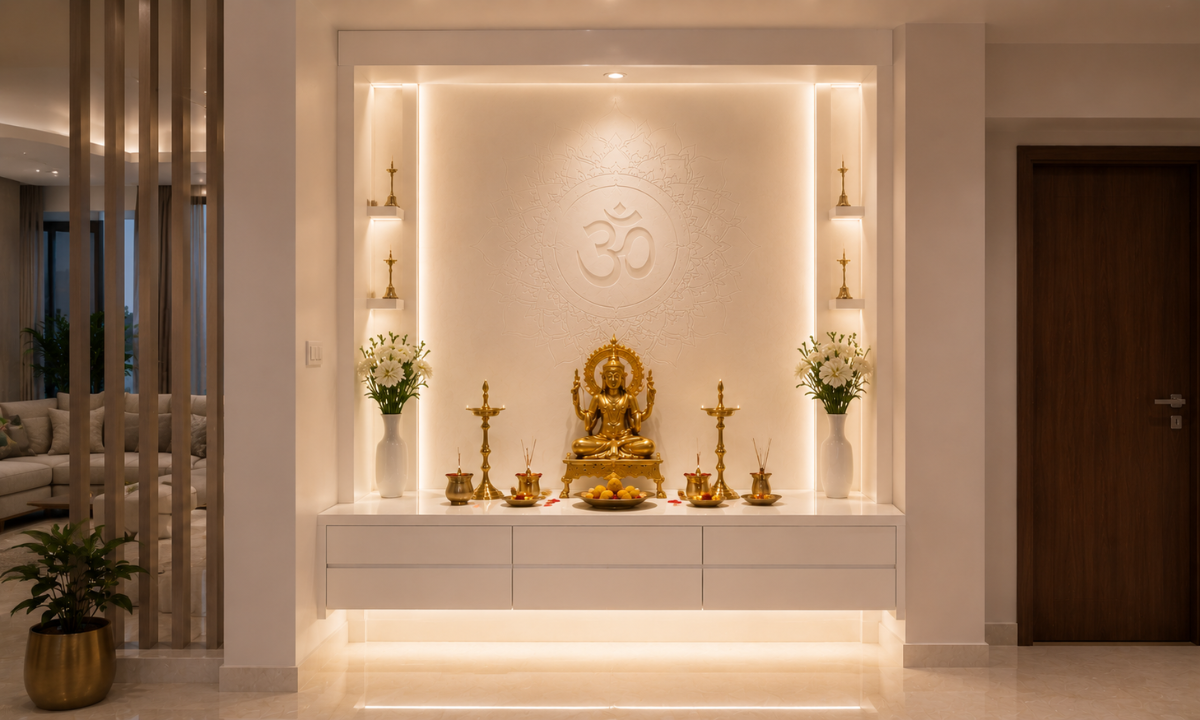
White represents absolute purity and peace, making it the most traditional color choice for a sacred space. However, placing a traditional white marble temple in a modern 2BHK can often look bulky and mismatched. Transitioning this concept into a sleek, monolithic white structure updates the aesthetic while retaining the spiritual purity of the color.
We highly recommend using Corian (an acrylic solid surface) instead of natural marble. Factually, natural marble is highly porous; if you spill oil, kumkum, or turmeric, it will stain permanently.
Corian is completely non-porous and seamless. It resists all daily pooja stains and, if lightly scratched over the years, can simply be buffed out to look brand new.
17. High-Gloss PU-Coated Units
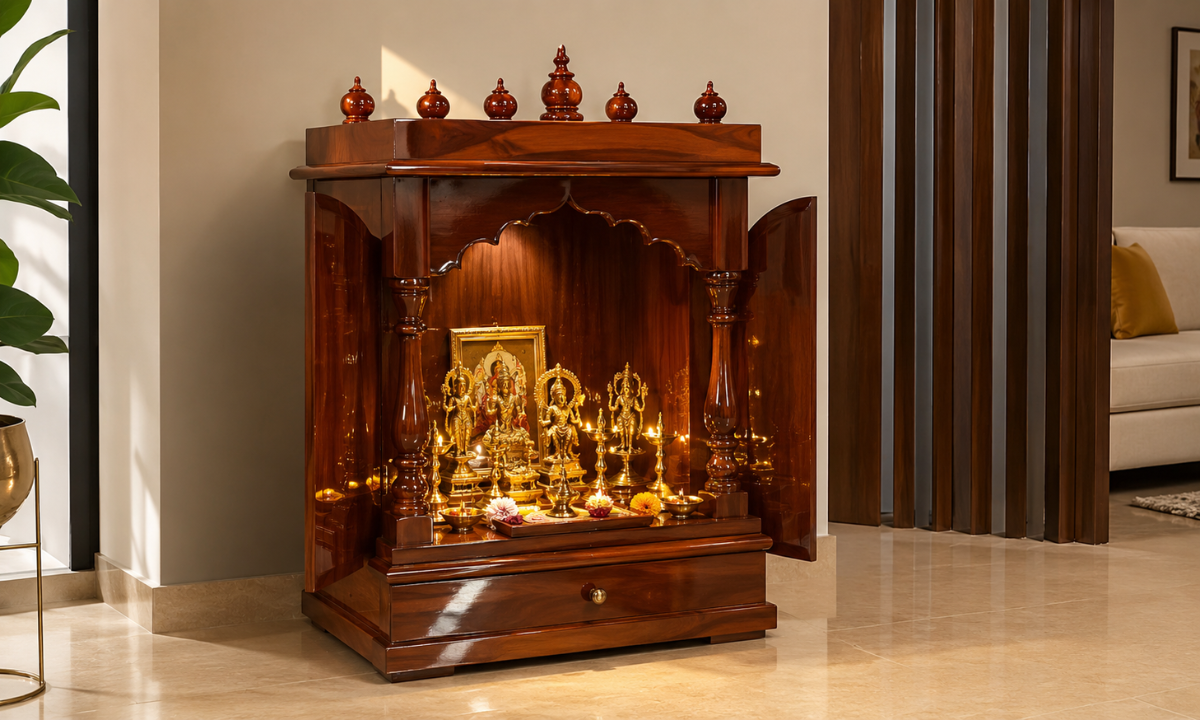
Traditional home temples were often matte or naturally finished. In a compact apartment, however, matte surfaces absorb light, making tight corners feel darker. Introducing a high-gloss finish to a traditionally shaped mandir bounces ambient room light around the space, making the altar feel vibrant and visually larger.
We utilize a multi-coat Polyurethane (PU) high-gloss finish over engineered wood. This isn’t just about the luxurious shine; factually, a PU coating acts as a hardened protective shell. It seals the wood completely, making it highly resistant to the heat generated by daily incense and oil lamps, while allowing you to wipe away dust with a single swipe.
18. Traditional Bell-Adorned Room Dividers
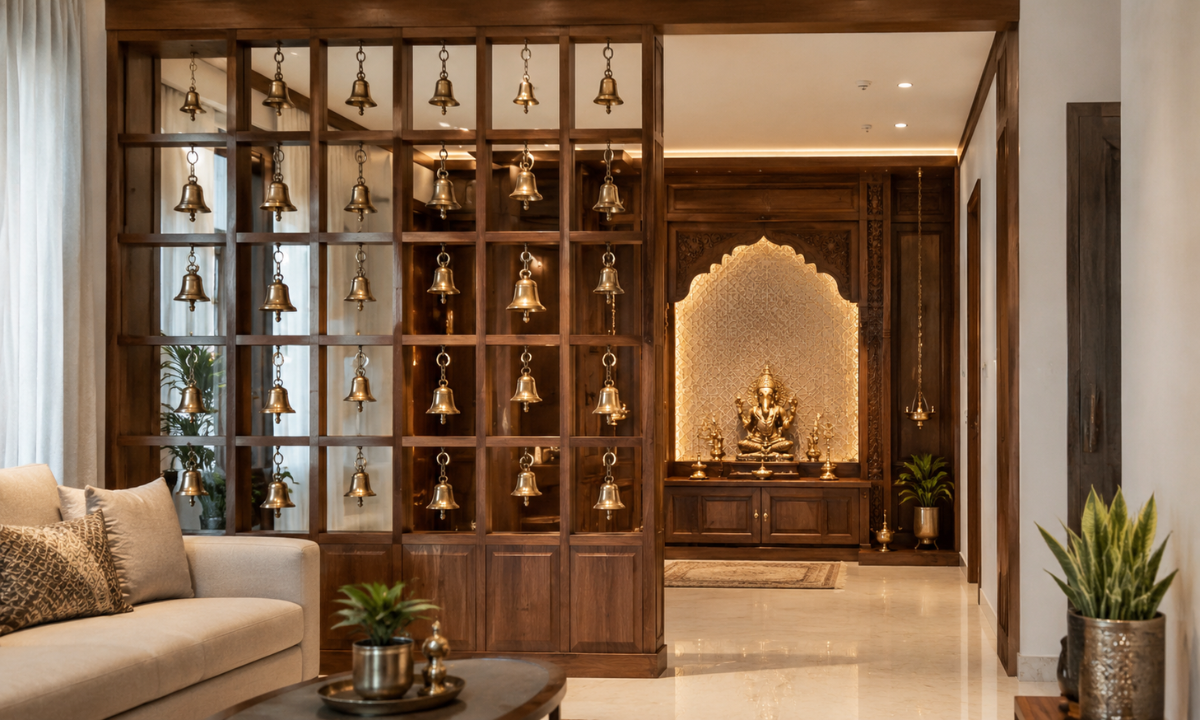
If your pooja space needs to be carved out of an open-plan living room, you need a way to define the boundary. Instead of a solid wall, a wooden partition that incorporates hanging brass bells (ghantis) serves as a stunning architectural divider that immediately signals the sanctity of the space behind it.
We design floor-to-ceiling wooden grids using robust engineered wood to securely hold the weight of solid brass bells. From a Vastu and spiritual perspective, the sound of brass bells clears negative energy. Factually, by leaving the grid open, cross-ventilation through your apartment will occasionally cause the bells to chime softly, bringing a beautiful, organic acoustic element to your daily home life.
Maximum Utility (Storage-Heavy Designs)
A beautiful mandir quickly loses its spiritual serenity if the surfaces are cluttered with half-empty oil bottles, matchboxes, incense packets, and extra cotton wicks. In a compact 2BHK, you cannot afford to have these daily prayer items spilling over into your living or dining room. The ultimate goal of an intelligent layout is to hide the utility while showcasing the divinity.
By prioritizing deep, concealed storage solutions, you ensure that the visual focus remains solely on the idols and the ambient lighting.
Here are two highly functional, storage-heavy designs that keep your spiritual space immaculately organized:
19. The Deep Base Cabinet with Pull-Out Trays
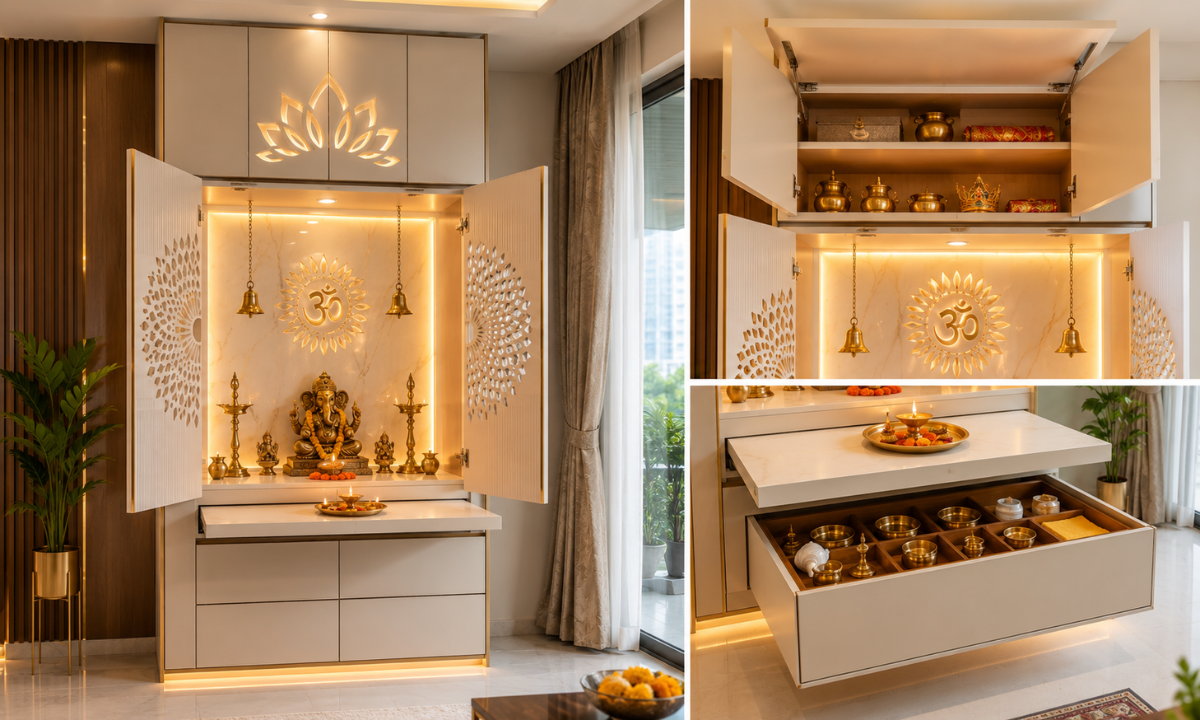
The biggest challenge in a small pooja room with storage is having enough surface area to place lit diyas (oil lamps) safely away from the main wooden structure, while also having immediate access to daily prayer items.
A deep base cabinet solves both issues. By integrating a dedicated, sliding pull-out tray right below the main idol platform, you create a temporary, heat-safe surface for your aarti plate that can be simply pushed back out of sight when you are finished.
For the pull-out tray, we utilize heavy-duty telescopic channels topped with a thin slab of Quartz or Granite rather than wood, ensuring zero fire hazards. Below the tray, deep drawers built with Boiling Water Resistant (BWR) plywood provide robust, compartmentalized storage for heavy brass urlis, lamps, and daily consumables.
20. The Floor-to-Ceiling Tall Unit
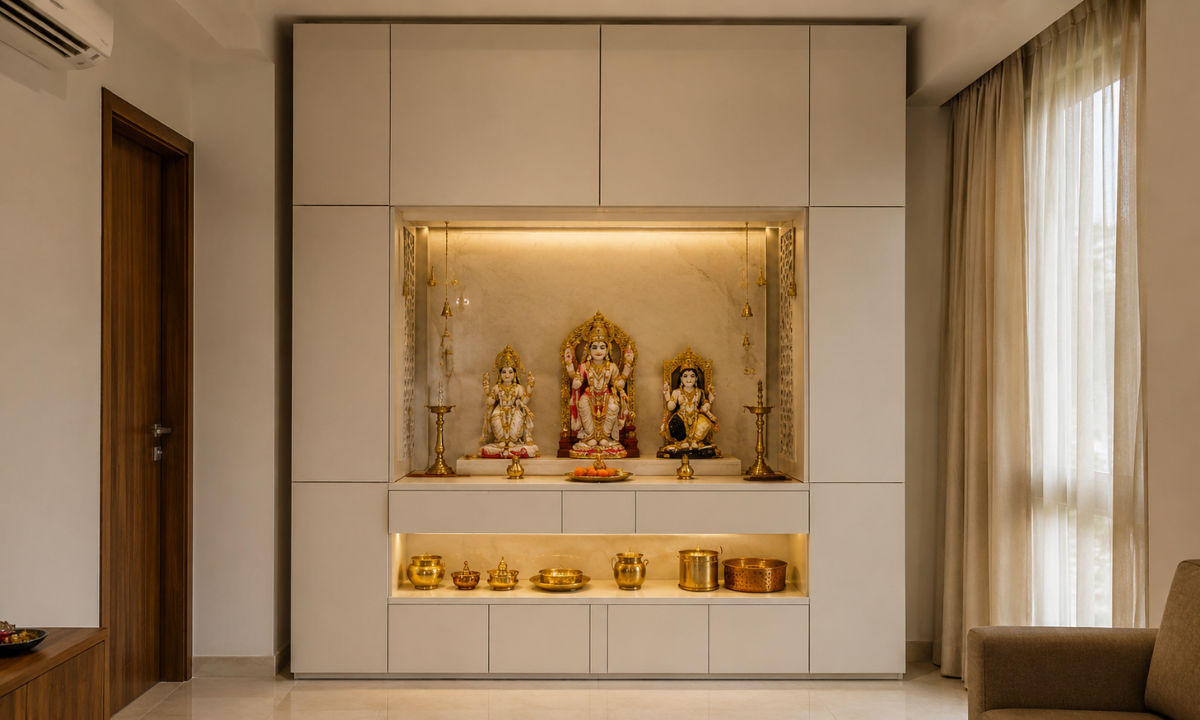
When floor space is heavily restricted, the only way to go is up. A comprehensive Home temple design should utilize the entire vertical volume of your apartment. By building the unit from the floor all the way to the ceiling, you create a massive amount of storage without increasing the footprint.
The lower section houses heavy brass and copper items, the middle acts as the illuminated display for the deities, and the top-tier cabinets store seasonal festival decor (like Diwali lights and torans) that you only need to access once a year.
To prevent a floor-to-ceiling unit from looking like a bulky bedroom wardrobe, we use push-to-open magnetic latches instead of visible handles. Factually, leaving no gap between the top of the unit and the ceiling eliminates the common problem of dust accumulating in unreachable places, making your home significantly easier to maintain.
Why Choose Elevate Interio?
Designing a compact 2BHK in Bangalore requires more than just buying loose furniture; it requires intelligent space planning and reliable execution. At Elevate Interio, we believe that luxury and personalization shouldn’t come with an exorbitant price tag or endless contractor delays.
When you choose us for your home transformation, you are choosing complete peace of mind:
- Affordable Luxury (Starting at 15 Lakhs): We deliver premium, turnkey interior solutions that fit realistic budgets. Our pricing is 100% transparent with zero hidden costs, ensuring you know exactly what you are paying for from day one.
- 45-Day Delivery Guarantee: We value your time. Through structured planning and an expert in-house team, we ensure your residential interior project is completed and handed over within 45 to 60 days.
- 100% Personalized Designs: We do not force you into fixed modular templates. Every pooja room, kitchen, and living space is custom-designed around your specific floor plan, lifestyle, and aesthetic preferences.
- 10-15 Years Warranty: Affordable never means compromising on quality. We use only premium, branded materials backed by a comprehensive 10 to 15-year warranty, providing you with lifelong service support.
From the initial 3D design phase to material sourcing and final on-site execution, our dedicated project managers handle everything. You get a hassle-free, move-in-ready home.
Conclusion
Integrating a spiritual space into a modern apartment doesn’t mean sacrificing your floor plan or settling for a cramped, dark corner. By utilizing vertical wall space, smart built-in niches, reflective materials, and deep storage solutions, a small pooja room can become the most serene and beautifully designed architectural feature of your home.
Ready to transform your 2BHK into a spacious, elegant sanctuary? Book a free consultation with Elevate Interio today, and let our expert designers bring your vision to life on time and within budget.