
Have you ever wondered why some homes feel instantly welcoming while others feel cluttered despite having expensive furniture? Do you ever look at your new apartment and feel overwhelmed by the task of making it both functional and stylish?
Moving into a new home is a significant milestone, but the process of transforming a shell into a sanctuary can be daunting. Finding the Best interior designers in Bangalore is the first step toward ensuring your space reflects your personality without sacrificing practicality.
As leading Interior designers in Bangalore, we believe that a beautiful home is built on a foundation of science as much as art.
Understanding the fundamental elements of interior design is what separates a professional, polished finish from a random collection of decor items. It is the invisible language that dictates how a room feels, how much light it captures, and how efficiently you move through your daily routines.
In this guide, we will break down the essential components that every homeowner should know before they begin their renovation. We will explore how professional planning can turn a standard floor plan into a premium living experience that fits your lifestyle and budget perfectly.
Key Takeaways
- The practical definition of interior design is beyond simple home decoration.
- A comprehensive breakdown of the seven core elements of interior design.
- How to utilize the principles of interior design to create balance in a 3BHK.
- Strategies for designing interior spaces that cater to the unique Bangalore lifestyle.
- Selecting high-quality finishes and materials that offer a premium look with low maintenance.
- The benefits of partnering with the best interior designers in Bangalore for a turnkey experience.
What Is Interior Design?
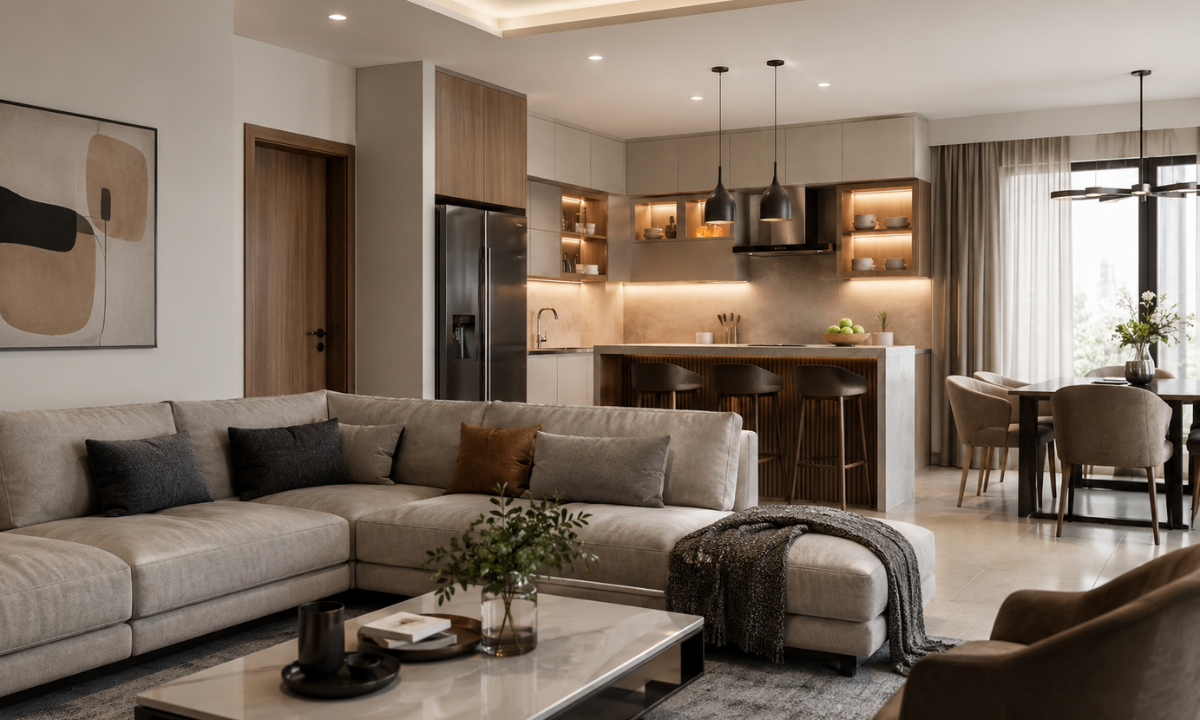
Many homeowners mistakenly believe that interior design is simply about picking a paint color or choosing a stylish sofa. However, if you are truly looking at what interior design is, you will find that it is a rigorous process of problem-solving.
It is the art and science of understanding human behavior to create functional spaces within a building. In a city like Bangalore, where space is a premium commodity, design is about ensuring that your home works for you, rather than you working around your home.
While decoration focuses on the aesthetic “look” of a room, design focuses on the “experience” of the room. This involves everything from electrical mapping for your home office to the ergonomic height of your modular kitchen counter.
A well-designed home facilitates a smooth daily routine, while a decorated-only home might look pretty but feel frustrating to live in.
Design vs. Decoration: The Critical Differences
| Feature | Interior Decoration | Interior Design |
|---|---|---|
| Primary Goal | Enhancing visual appeal. | Maximizing functionality and safety. |
| Scope of Work | Selecting furniture, rugs, and paint. | Space planning, structural changes, and lighting design. |
| Technicality | Relies on personal taste and trends. | Relies on building codes, ergonomics, and spatial math. |
| Outcome | A room that looks beautiful. | A room that improves your daily quality of life. |
Why Professional Design is Essential for Bangalore Apartments
When we talk about designing interior spaces for modern families, we focus on three main pillars that go far beyond basic decor:
- Spatial Optimization: This involves looking at a 1200 square foot 3BHK and finding ways to include a work-from-home nook, a prayer area, and ample storage without making the house feel like a warehouse.
- Material Science: A professional designer knows which finishes can withstand the local humidity and which laminates are actually scratch-resistant. We select materials that offer a “lifestyle-centric” look but are durable enough for homes with active children or pets.
- Technical Integration: True design accounts for the placement of switchboards, the flow of the air conditioning, and the weight-bearing capacity of wall-mounted units before a single piece of furniture is even purchased.
Understanding this distinction is the first step toward building a truly bespoke home. It ensures that every rupee you spend is an investment in your comfort, not just a temporary fix for an empty room.
The 7 Core Elements of Interior Design Explained
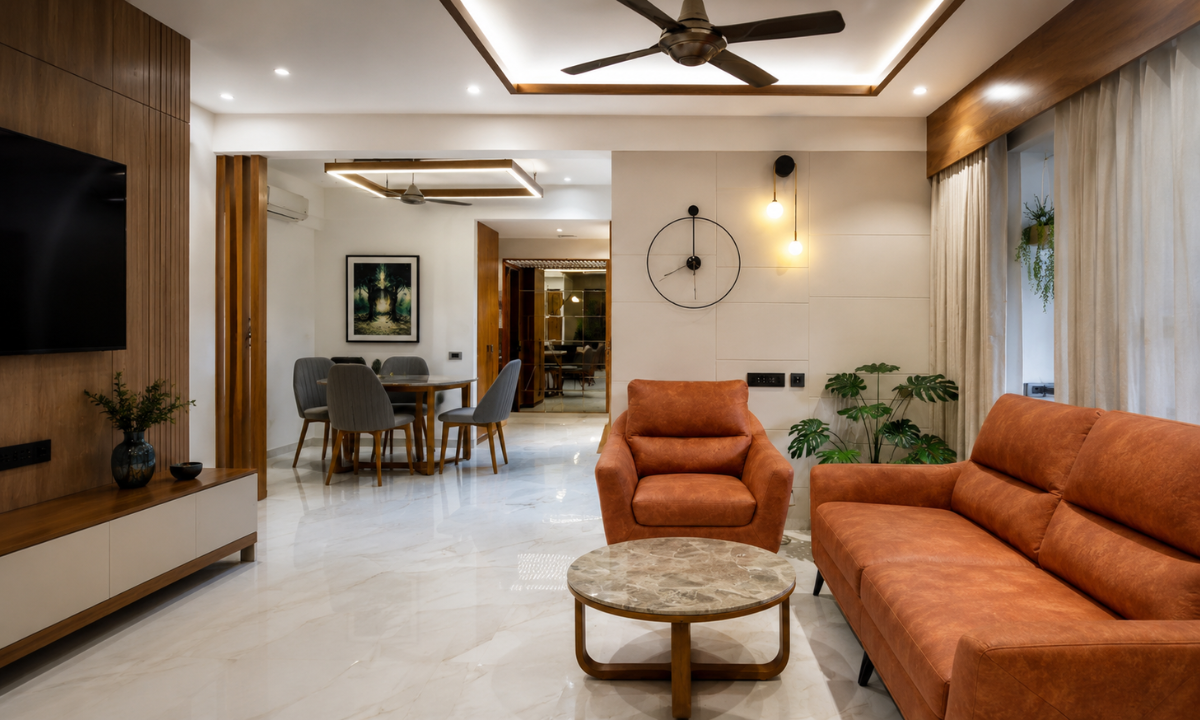
Think of these elements as the basic ingredients of a recipe. Individually, they are just components, but when combined with precision, they create a balanced and beautiful home.
For Interior designers in Bangalore, managing these elements is the key to making a standard apartment floor plan feel like a custom-designed residence. Mastering the elements of interior design allows us to manipulate how a room is perceived, making it feel larger, brighter, or more organized than it originally appeared.
1. Space is The Foundation of Every Room
Space is perhaps the most critical of the elements because it determines the physical limits of your project. We divide this into “Positive Space,” which is the area occupied by your furniture and cabinets, and “Negative Space,” which is the empty area that allows you to move freely.
In a typical Bangalore 3BHK, the challenge is to find the perfect equilibrium. Too much furniture makes the room feel cramped, while too little makes it feel cold and unfinished.
2. Line and Directing the Eye
Lines are used to create a sense of direction and mood. Horizontal lines, often found in low-profile sofas and long TV units, create a feeling of stability and peace. Vertical lines, such as floor-to-ceiling wardrobes or long curtains, draw the eye upward and make your ceilings feel taller than they actually are.
Dynamic lines, such as curves or diagonals, add energy and movement to areas like a feature wall or a breakfast counter.
3. Form: The Shape of Your World
Form refers to the shapes of the objects within your room, whether they are organic or geometric. In a modern modular home, we often see geometric forms in the cabinetry and shelving.
To prevent the room from feeling too rigid, we introduce organic forms through curved armchairs or circular dining tables. This contrast is essential for a space that feels balanced and approachable.
4. Light: The Mood Setter
Without proper lighting, all other design elements lose their impact. We categorize light into three layers: Task lighting for functional areas like the kitchen counter, Accent lighting to highlight art or textures, and Ambient lighting for general visibility. The smart use of “Cove Lighting” in false ceilings is a popular technique to provide a soft, premium glow that doesn’t overwhelm the senses.
5. Color: Influencing Emotion
Color has the power to change the perceived size and temperature of a room. Light colors like off-whites, beiges, and soft greys reflect more light, making a small bedroom feel much larger. Bolder colors are often reserved for “Statement Walls” or upholstery to add personality. Choosing a cohesive color palette ensures that the transition from your living room to your dining area feels seamless and intentional.
6. Texture: The Tactile Experience
Texture is often what makes a home feel “expensive.” It refers to how a surface feels or appears to feel. We use a mix of “Tactile Textures” like a plush rug or a velvet cushion and “Visual Textures” like a wood-grain laminate or a marble-finish wall. Mixing different textures adds depth and prevents a monochromatic room from looking flat or boring.
7. Pattern: Adding Visual Interest
Patterns are used to add life and character to a space. Whether it is a geometric rug, a subtle wallpaper, or a herringbone tile layout in the bathroom, patterns help tell a story.
The secret to using patterns in a premium apartment is moderation. We usually pick one dominant pattern and balance it with solid colors to ensure the room stays sophisticated rather than chaotic.
Principles of Interior Design
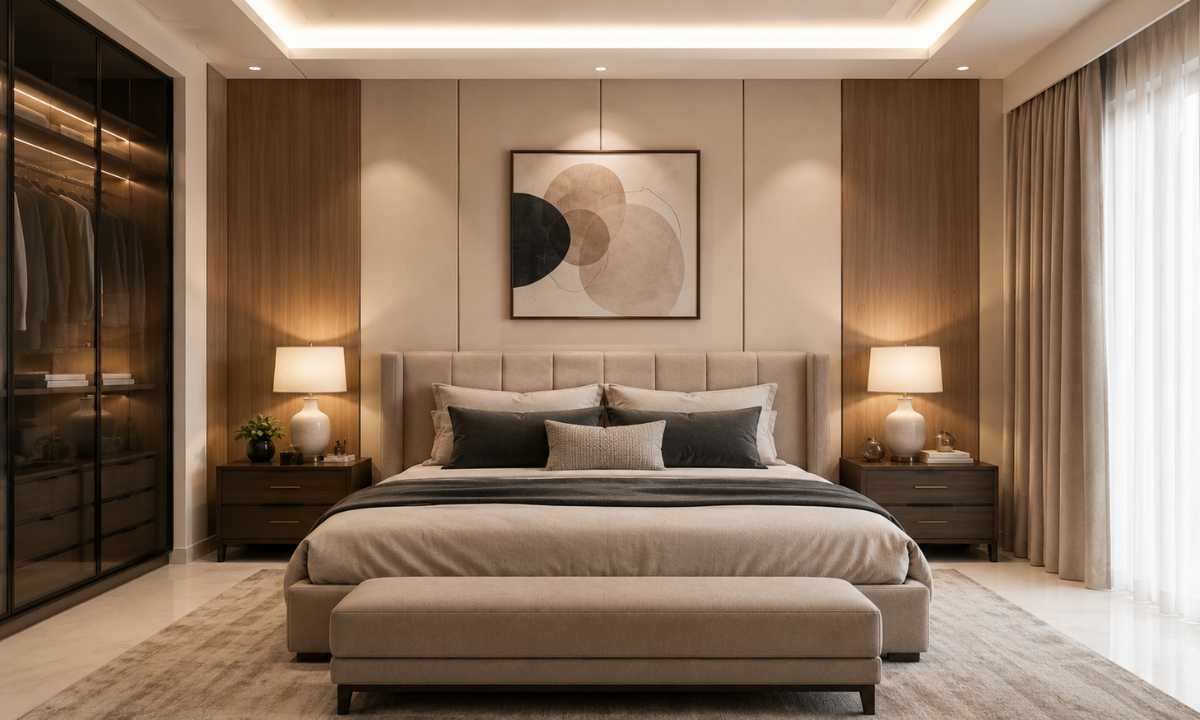
If the elements are the ingredients, then the Principles of interior design are the instructions that tell you how to use them. These principles ensure that your home doesn’t just have nice pieces of furniture, but that everything works together to create a cohesive and comfortable environment.
For a typical apartment in Bangalore, applying these rules is what prevents a space from feeling cluttered or disjointed.
1. Balance: Distributing Visual Weight
Balance is about ensuring that no single part of a room feels “heavier” than another. We achieve this in three ways:
- Symmetrical Balance: This is the most traditional approach, where you mirror items on either side of a central axis, such as identical bedside tables and lamps.
- Asymmetrical Balance: This is more modern and dynamic. Instead of mirroring, we use different objects with similar visual weight. For example, a large 3-seater sofa on one side can be balanced by two smaller accent chairs and a floor lamp on the other.
- Radial Balance: This involves items arranged around a central point, like a circular dining table with chairs placed evenly around it, creating a sense of focus and community.
2. Harmony and Unity
Unity is the sense that all the elements in your home belong together. In a 3BHK, this means creating a visual thread that connects the living room to the dining area and the bedrooms.
We often achieve this through a consistent color palette or a repeating material finish, such as using the same wood-tone laminate for both the TV unit and the kitchen cabinetry. Harmony is the result of this unity, giving you a home that feels calm and well-thought-out.
3. Rhythm
Rhythm in design is much like rhythm in music: it is about repetition and progression. By repeating a certain color, pattern, or texture throughout a room, you lead the eye from one point to another. In a long hallway, you might create rhythm by placing a series of identical light fixtures or a gallery wall of frames. This prevents a space from feeling stagnant and adds a layer of professional polish.
4. Contrast: Adding Depth and Interest
Contrast is the secret to making a room “pop.” It is created by placing two opposing elements together. This could be a dark charcoal grey wall behind a light cream sofa, or a smooth marble countertop next to a rough, textured backsplash. Contrast prevents a room from looking flat and helps highlight specific features, ensuring that your home has character and energy.
5. Scale and Proportion
This is the most common area where DIY designs fail. Proportion refers to how the size of one object relates to another, while scale refers to how the size of an object relates to the room itself. A massive, oversized sectional sofa will make a standard Bangalore living room feel tiny and cramped. Conversely, a small coffee table in a large hall will look lost.
We use the “Golden Ratio” to ensure that the scale of your modular units and furniture fits the architectural dimensions of your apartment perfectly.
Designing Interior Spaces for the Bangalore Lifestyle
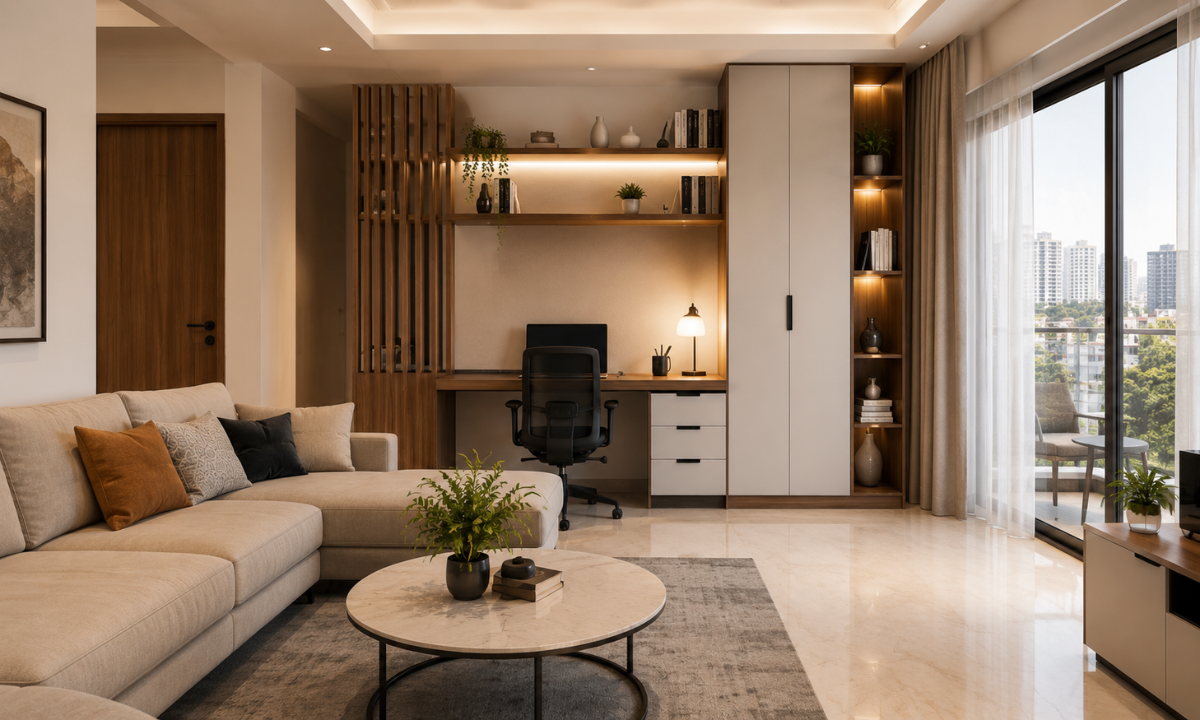
In a city defined by its fast-paced tech culture and evolving residential landscape, designing interior spaces requires a deep understanding of how Bangaloreans actually live.
We are no longer designing just for aesthetics; we are designing for a lifestyle that often balances high-pressure hybrid work with a need for a serene, private retreat. In a typical Bangalore apartment, every square foot must justify its existence through both utility and style.
The most successful homes in the city are those that embrace “Multifunctional Zones.” Because many of us work from home at least a few days a week, the traditional living room has evolved into a hybrid space.
We often integrate sleek, wall-mounted workstations into the living or bedroom areas that can be tucked away when the workday ends. This is where the elements of interior design, specifically space and form, become vital. By using modular furniture with clean lines, we can create a dedicated office nook that doesn’t disrupt the relaxing atmosphere of your home.
The Open Kitchen
The kitchen has shifted from a closed-off service area to the social heart of the house. Modern Bangalore homes favor the L-shaped or U-shaped open kitchen layout, which allows the person cooking to remain part of the conversation in the dining area.
We prioritize high-performance materials like quartz for countertops and fingerprint-resistant matte acrylics for cabinetry. These choices reflect the “Accessible Premium” philosophy: they look incredibly sophisticated but are durable enough to handle the spices and high-heat cooking of an Indian household.
Maximizing Natural Light and Ventilation
Bangalore is blessed with a moderate climate, and our design approach always seeks to “bring the outside in.” When we are designing interior spaces, we prioritize the flow of air and light. This means using sheer curtains that allow sunlight to filter through while maintaining privacy, and strategically placing mirrors opposite windows to bounce natural light into darker corners.
We also pay special attention to balcony integration, transforming these small outdoor areas into “mini-sanctuaries” with vertical gardens or cozy seating, effectively extending your living space.
Tailoring the fundamental principles of design to the specific needs of an urban professional, we create homes that feel personal, efficient, and deeply grounding. It is about creating a space that keeps up with your ambition while providing the comfort you need to recharge.
Why Choose Elevate Interio for Your New Home?
Finding the right partner to bring your vision to life is the most important decision in your home-building journey. While many Interior designers in Bangalore offer beautiful concepts, Elevate Interio bridges the gap between high-end design theory and practical, real-world execution.
When you choose to work with the Best interior designers in Bangalore, you are choosing peace of mind. Here is how we ensure your experience is as seamless as your new home’s layout:
- Transparent 3D-to-Reality Quotes: We believe in absolute honesty from day one. Our quotes are detailed and transparent, ensuring there are no “hidden surprises” or sudden price hikes halfway through the project.
- The 45-Day Delivery Promise: We value your time. Our streamlined modular manufacturing process allows us to deliver a fully finished home in just 45 days after the design is finalized, getting you into your new space faster.
- A 10-Year Comprehensive Warranty: We stand by our craftsmanship. By using high-performance materials like termite-resistant engineered wood and premium acrylics, we provide a decade of protection for your investment.
- Smart Modular Solutions: We specialize in designing interior spaces that maximize every inch. From floor-to-ceiling wardrobes to hidden breakfast counters, our modular units are built in a controlled factory environment for a millimetre-perfect finish.
- The Indiranagar Experience Centre: We invite you to touch and feel the materials before you decide. Our experience centre allows you to see exactly how different elements of interior design, like lighting and texture, look in a real-world setting.
We specialize in the Accessible Premium niche, ensuring that every 3BHK or penthouse we design feels luxurious, stays within a realistic budget, and is built to last. We don’t just follow the Principles of interior design; we adapt them to the unique architectural landscape of Bangalore’s newest residential corridors.
Way Forward
Mastering the elements of interior design is about more than just filling a room with furniture; it is about creating an environment that supports your aspirations and provides a sanctuary for your family. Whether you are focusing on the flow of light in your living room or the rhythmic balance of your bedroom decor, understanding these fundamentals ensures that your home remains timeless. In a city as vibrant and fast-moving as Bangalore, your home should be the one place where everything feels perfectly in its place.
At Elevate Interio, we take the complexity out of the design process, allowing you to enjoy the transformation of your space without the typical stress of renovation. By combining the core Principles of interior design with modern technology and a commitment to quality, we help you build a home that is as functional as it is beautiful.
Ready to start your design journey? Visit our Indiranagar experience centre today to speak with our experts and see how we can turn your 3BHK into a premium masterpiece.
Frequently Asked Questions (FAQs)
1. What are the 7 core elements of interior design?
The seven fundamental elements of interior design are space, line, form, light, color, texture, and pattern. Professional interior designers use these components together to create a room that is not only visually appealing but also highly functional and proportionate to the home’s architecture.
2. Why should I hire the best interior designers in Bangalore instead of managing the project myself?
While decorating can be a DIY project, designing interior spaces involves technical planning, such as electrical mapping, ergonomic space optimization, and selecting climate-appropriate materials. Hiring top interior designers in Bangalore ensures a stress-free process with professional 3D planning, exact modular manufacturing, and guaranteed delivery timelines, preventing costly mistakes.
3. How does interior design differ from interior decoration?
If you are wondering what interior design is, the key difference lies in functionality. Decoration focuses purely on the visual aesthetics, like choosing paint colors, cushions, and curtains. Interior design is a scientific approach to optimizing the layout, improving traffic flow, and maximizing storage, ensuring the apartment perfectly supports your daily lifestyle.